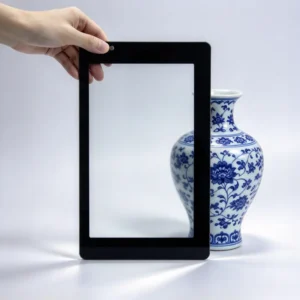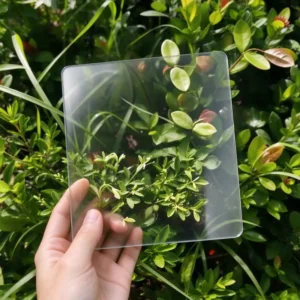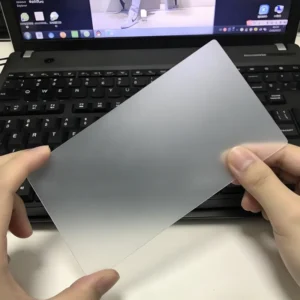
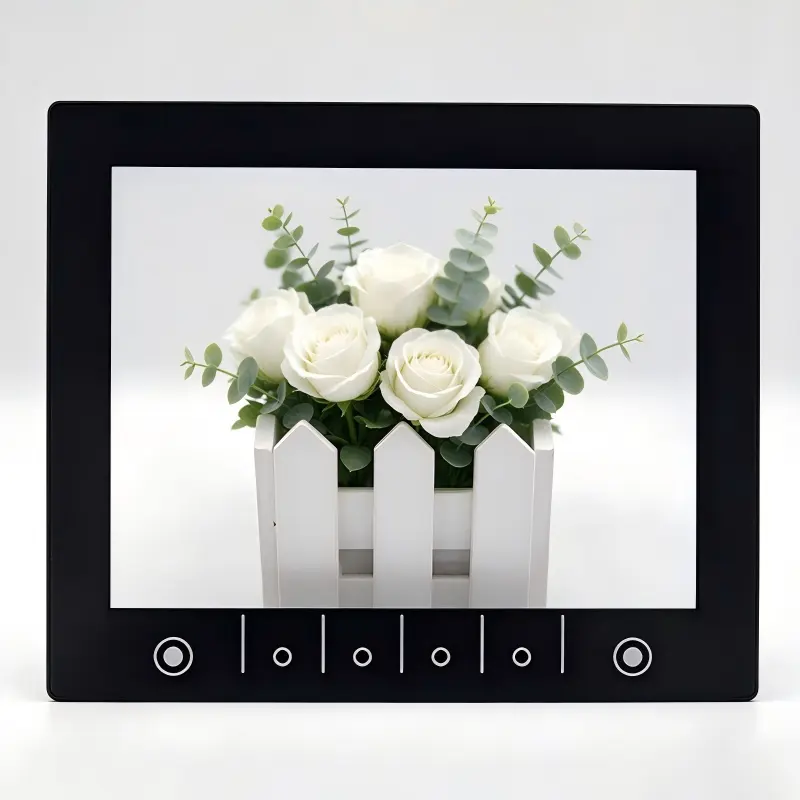
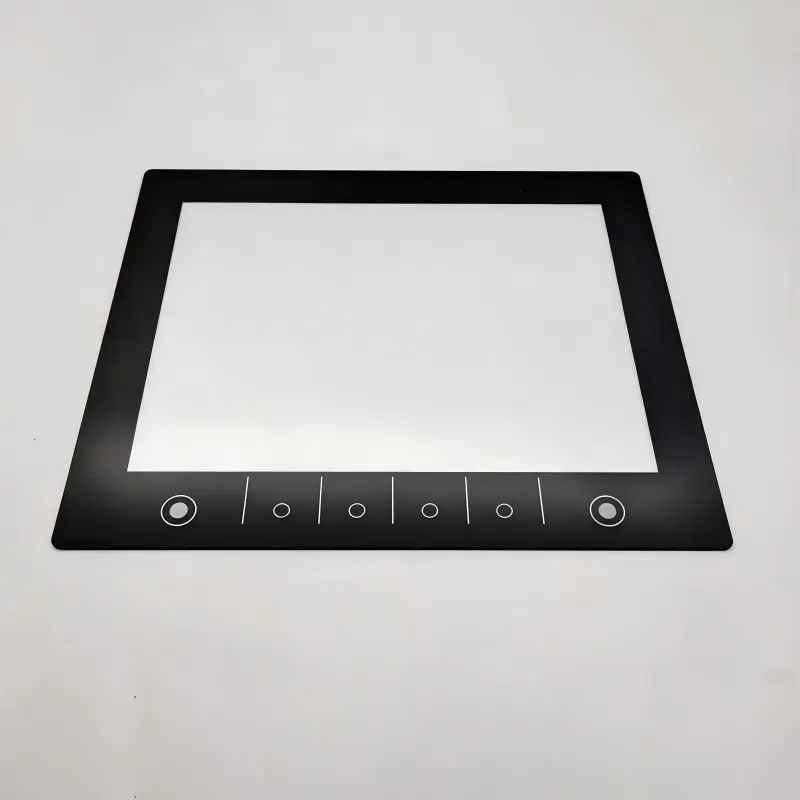
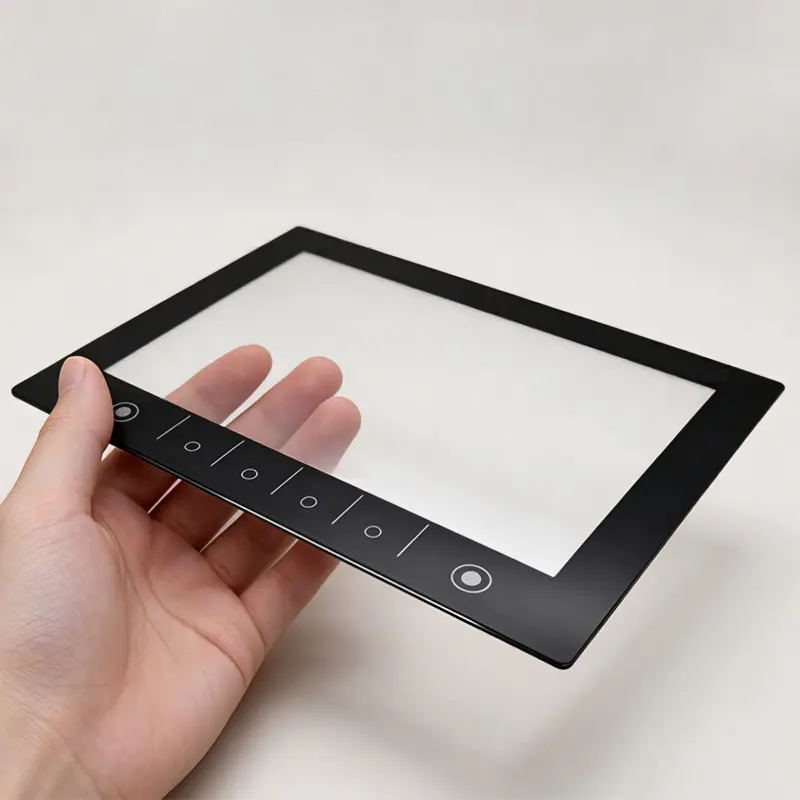

AG Glass for Electronic Display Applications
This product is intended for display manufacturers and equipment integrators who need a custom glass front panel rather than a standard sheet of glass.
Potential applications include:
- High-resolution industrial displays
- Interactive flat panel displays
- Electronic control panels
- Touchscreen monitors
- Digital information systems
- Custom display assemblies
The appropriate surface finish depends on pixel density, viewing distance, display brightness and ambient lighting. A finish suitable for a large interactive screen may not be the right choice for a compact display with small characters.

Surface Finish and Image Quality
AG performance should be evaluated alongside image clarity. A heavily textured surface may diffuse reflections effectively but can also affect the appearance of fine details.
For high-resolution applications, buyers should consider:
- Surface gloss and haze requirements
- Image sharpness and sparkle
- Light transmission
- Viewing distance and angle
- Compatibility with the display module
If the project has established optical specifications, provide them with the initial enquiry. If not, sample evaluation can help determine an appropriate finish before production approval.
Custom Glass Processing
Depending on the selected material, thickness and design, available processing options can be reviewed for:
- Custom dimensions and glass outlines
- CNC cutouts and mounting holes
- Edge grinding and polishing
- Silk-screen printed borders and graphics
- Chemical strengthening or thermal tempering
- AG surface treatment
The selected process must be compatible with the glass substrate and finished part geometry.
What to Include in Your RFQ
For an accurate project review, provide a drawing, required thickness, AG surface requirements, display type and estimated quantity. Include any dimensional tolerances, printed areas and sample references that have already been approved.
If the display is particularly sensitive to sparkle or image distortion, specify the actual display resolution and request evaluation of the assembled glass and display rather than relying only on a glass sample.
Request a Custom AG Glass Quote
Send your technical drawing and project requirements for a review of material selection, surface finish and manufacturing feasibility.
Frequently Asked Questions About AG Glass for High-Resolution Displays
1. What is AG glass for high-resolution displays?
AG glass is cover glass with an anti-glare surface designed to diffuse reflected light. For high-resolution displays, the surface finish should be selected to balance glare control with the visibility of fine text, graphics and interface details.
2. Does AG glass affect display clarity?
It can. The degree of surface diffusion may affect perceived sharpness, sparkle and contrast. The result depends on the AG texture, display pixel density and viewing conditions. Testing samples with the intended display module is recommended.
3. What haze level is suitable for high-resolution display glass?
There is no single haze value that suits every display. The appropriate target depends on the display design, ambient lighting and required image clarity. Buyers should establish the optical requirements through sample evaluation and confirm the measurement method before production.
4. Can AG glass be customized for touchscreen displays?
Custom dimensions, thickness, edge geometry, mounting holes and printed areas can be specified according to the project drawing, subject to manufacturing feasibility. The glass should also be evaluated with the intended touchscreen structure to confirm optical and touch performance.
5. Can AG glass be chemically strengthened?
Chemical strengthening may be an option depending on the glass composition, thickness and required mechanical performance. The material and strengthening process should be reviewed before confirming feasibility for a specific part.
6. Is AG glass suitable for industrial control panels?
It can be suitable for industrial control panels where reflections interfere with screen readability. The selected finish should match the operating environment and preserve sufficient visibility of controls, numerical readings and interface graphics.
7. What information is needed for an AG glass quotation?
Provide the glass drawing, dimensions, thickness, required surface finish, optical targets if available, printing details, quantity and intended display application. A reference sample or display module can help clarify the optical requirements.
8. Can I request samples before mass production?
Sample evaluation can be discussed during the quotation process. The availability, cost and lead time should be confirmed for the specific project. Approve the optical appearance, dimensions and other critical requirements before releasing the production order.