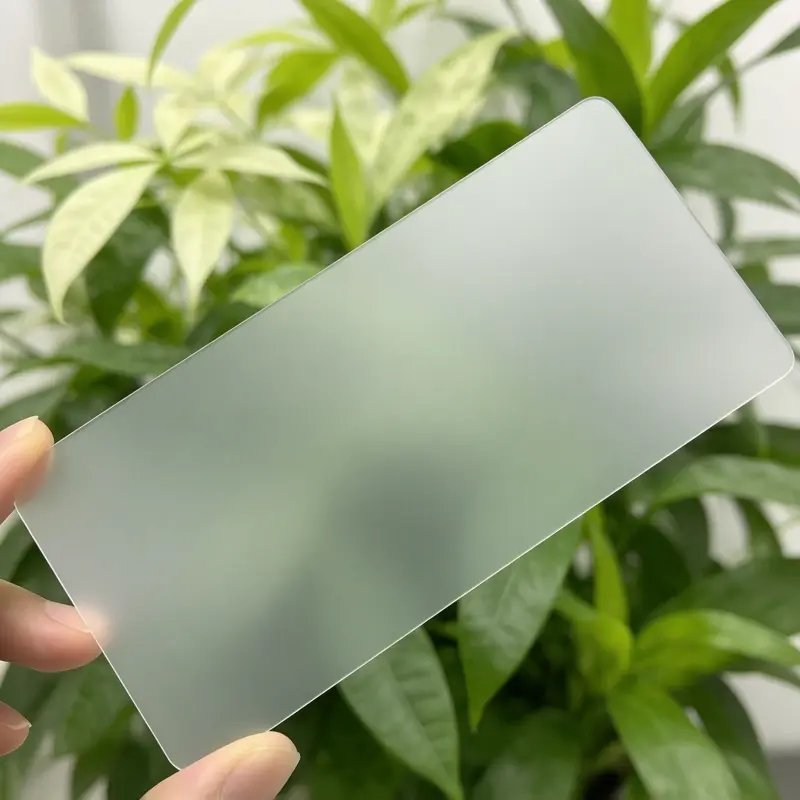

What Is Non-Glare Display Glass?
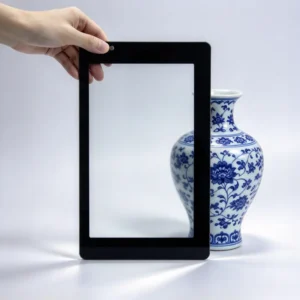
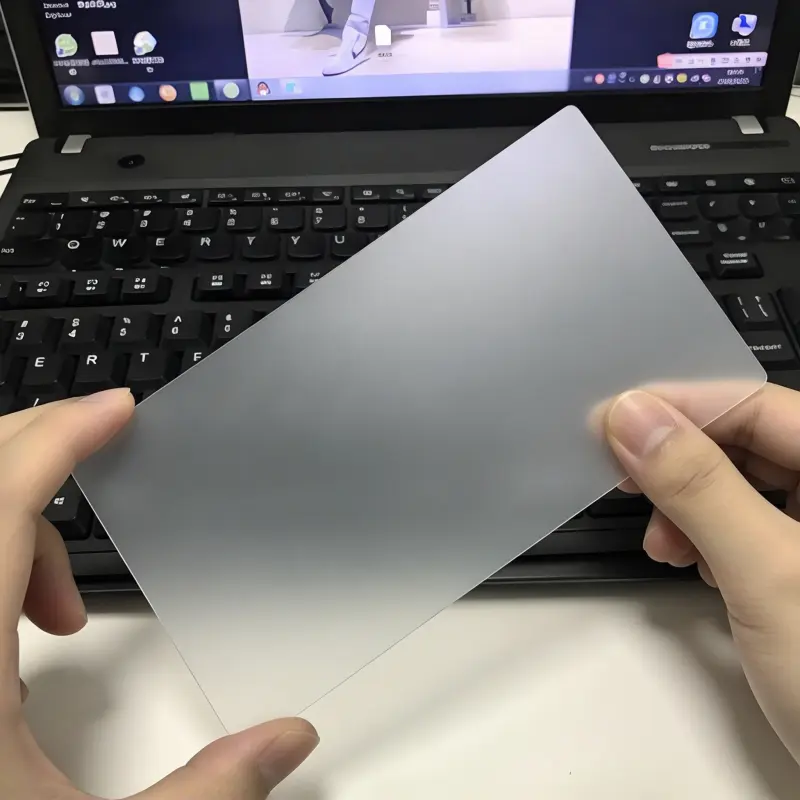
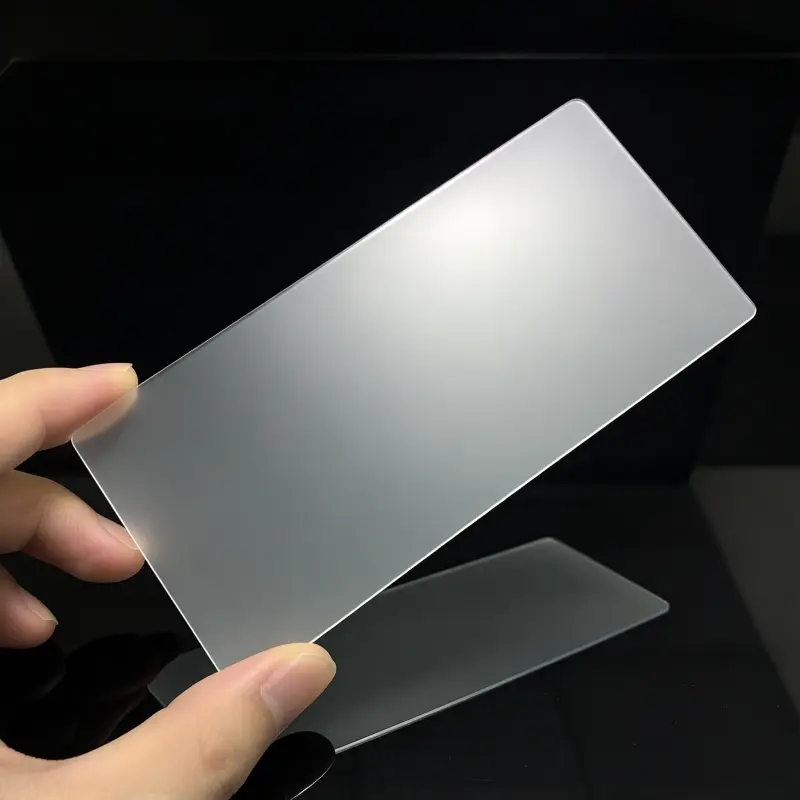
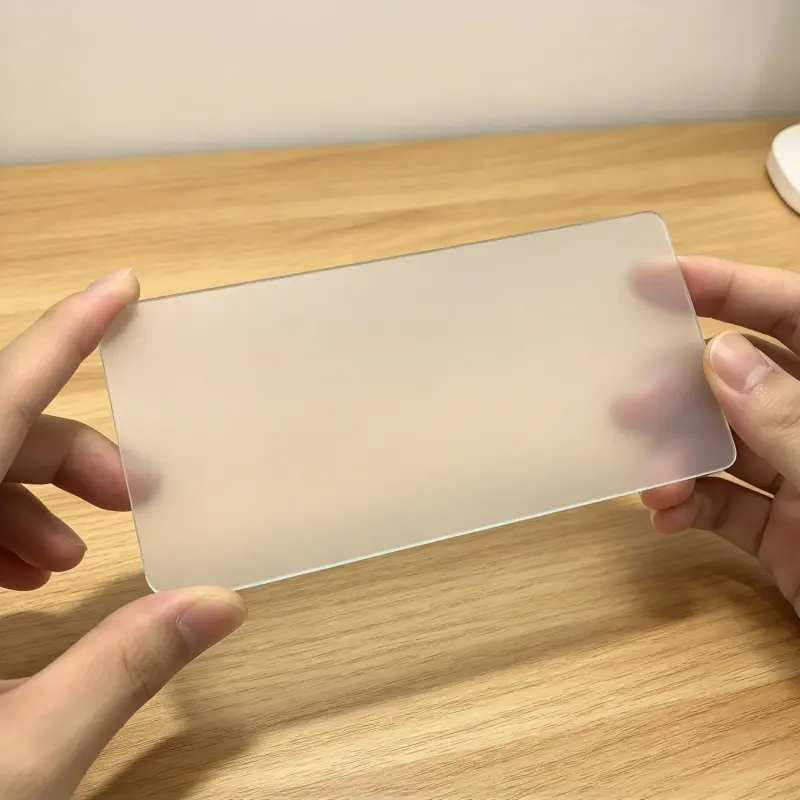
Non-glare display glass is a display protection glass designed to reduce strong surface reflections.
The glass surface can be processed with a controlled matte or etched texture. Instead of reflecting ambient light as a concentrated mirror-like reflection, the treated surface diffuses the reflected light in multiple directions.
This helps improve display readability in environments with:
- Direct or indirect sunlight
- Strong indoor lighting
- Industrial lighting
- Retail lighting
- Automotive dashboard lighting
- Outdoor display conditions
Non-glare glass is commonly used where display visibility is more important than a completely mirror-like glass surface.
Key Features
Reduced Surface Glare
The controlled surface texture helps diffuse reflected ambient light and reduce distracting glare on electronic displays.
Custom Haze and Gloss
Different display applications require different optical characteristics. We can customize the AG surface according to the required haze, gloss and visual appearance.
Chemical Etched Surface
Chemical etching can create a uniform matte surface directly on the glass. This provides a durable non-glare effect for demanding display applications.
Chemical Strengthening
For thin display glass, chemical strengthening can improve surface strength while maintaining a slim glass profile.
Custom Printing
Black borders, logos, icons, viewing windows and other decorative or functional graphics can be added through customized silk screen printing.
CNC Processing
We support custom cutting, edge grinding, polishing, drilling, slots and irregular shapes according to customer drawings.
Non-Glare Display Glass Specifications
| Item | Custom Options |
| Glass Material | Soda-Lime, Aluminosilicate, Gorilla Glass, AGC, Panda, Dragontrail |
| Thickness | 0.3–6.0 mm |
| Shape | Rectangle, Round, Irregular |
| Surface | Non-Glare / AG Etched |
| Haze | Custom |
| Gloss | Custom |
| Edge | Flat, Rounded, Beveled, Stepped |
| Strengthening | Chemical Strengthening / Thermal Tempering |
| Printing | Black, White, Gray, Custom Colors |
| CNC | Holes, Slots, Cut-outs, Special Shapes |
| Additional Treatment | AR / AF / AG |
| Bonding | OCA / 3M / VHB / Adhesive Transfer Tape |
Actual specifications can be customized according to the display module, drawing and optical requirements.
Applications
Industrial HMI
Non-glare glass helps improve readability of industrial control panels used under strong factory lighting or variable viewing conditions.
POS Terminals
For retail POS and payment terminals, non-glare glass can reduce distracting reflections while maintaining touchscreen visibility.
Outdoor Displays
Digital signage, ticket machines, kiosks and other outdoor displays can benefit from glare-reducing surface treatment.
Automotive Displays
Non-glare glass can be used for automotive center displays, instrument panels and vehicle control interfaces where ambient reflections can affect readability.
Medical Displays
Medical control panels and diagnostic equipment can use customized non-glare glass to improve display visibility under controlled lighting environments.
Consumer Electronics
Tablets, smart devices and other touchscreen products can use non-glare glass when reduced surface reflection is required.
Non-Glare Glass vs AR Glass
Non-glare and anti-reflective glass control reflected light in different ways.
Non-glare glass uses surface diffusion to scatter reflected light and reduce the visual impact of glare.
AR glass uses an optical coating to reduce surface reflectance and increase light transmission.
For some display applications, AG and AR can be combined to balance glare control, reflection reduction and optical clarity.
Custom Non-Glare Glass Manufacturing
We manufacture non-glare display glass according to customer drawings and technical requirements.
Our processing capabilities include:
- Glass cutting
- CNC machining
- Edge grinding and polishing
- Hole and slot processing
- Chemical strengthening
- Thermal tempering
- Chemical AG etching
- Silk screen printing
- AR / AF treatment
- OCA and adhesive bonding
- Ultrasonic cleaning
- Final optical and cosmetic inspection
This allows customers to source the glass substrate, mechanical processing, surface treatment and finishing processes from one supplier.
Quality Inspection
Each non-glare display glass project can be inspected according to the agreed specifications.
Typical inspection items include:
- Dimensions
- Thickness
- Flatness
- Edge quality
- Hole position
- Printing position
- Surface defects
- Haze
- Gloss
- Light transmittance
- AG surface uniformity
- Strengthening performance
For production projects, inspection criteria can be established from the customer’s drawings, samples and quality requirements.
FAQ
1. What is non-glare display glass?
Non-glare display glass is protective glass with a specially treated surface that diffuses reflected light and reduces distracting glare. It is commonly used for touchscreens, HMI panels, POS terminals, kiosks, automotive displays and outdoor electronic displays.
2. What is the difference between non-glare glass and anti-glare glass?
Non-glare glass and anti-glare glass are often used to describe similar glare-reducing glass products. In display applications, non-glare glass typically refers to a matte or etched surface that diffuses reflected light, while anti-glare is a broader term covering different glare-reduction technologies.
3. How is non-glare display glass manufactured?
Non-glare glass can be produced using controlled chemical etching or other surface treatments to create a fine matte texture. The process can be adjusted according to the required haze, gloss, appearance and optical performance.
4. Can you customize the haze of non-glare display glass?
Yes. The haze can be customized according to the display application and optical requirements. Different haze levels provide different balances between glare reduction, image clarity and surface appearance.
5. Can non-glare glass be used for touchscreens?
Yes. Non-glare display glass can be used as touchscreen cover glass for HMI panels, POS terminals, kiosks, industrial controls and consumer electronics.
6. Can non-glare display glass be chemically strengthened?
Yes. Non-glare glass can be chemically strengthened after the glass is processed, depending on the glass material and thickness. Chemical strengthening is suitable for applications requiring higher surface strength and thin glass construction.
7. Can you add black borders or custom printing?
Yes. We provide customized silk screen printing for black borders, logos, icons, viewing windows and other graphic requirements. Printing can be matched to customer drawings and specifications.
8. Can non-glare glass include holes and custom cut-outs?
Yes. CNC machining can be used to produce holes, slots, notches, curved edges and other customized geometries according to customer drawings.
9. Can non-glare glass also have AR or AF treatment?
Yes. Depending on the application, non-glare glass can be combined with additional AR (Anti-Reflective) or AF (Anti-Fingerprint) treatments. The final structure should be selected according to optical and surface-performance requirements.
10. What glass materials are available for non-glare display glass?
We can provide non-glare glass using different substrates, including soda-lime glass, aluminosilicate glass and other specialty glass materials. The appropriate material depends on thickness, strength, optical requirements and application.
11. What thicknesses are available?
Custom thicknesses can be supplied according to the application. Typical display cover glass thicknesses range from approximately 0.3 mm to 6.0 mm, subject to the selected glass material and processing requirements.
12. What applications use non-glare display glass?
Common applications include:
- Industrial HMI
- POS terminals
- Kiosks
- Outdoor displays
- Digital signage
- Automotive displays
- Medical equipment
- Consumer electronics
- Control panels
- Touchscreen devices
13. Can you provide prototypes before mass production?
Yes. Prototype samples can be produced for dimensional, optical, surface and assembly evaluation before mass production. Prototype requirements and quantities can be discussed according to the project.
14. What information is needed for a non-glare display glass quotation?
For an accurate quotation, please provide the glass dimensions, thickness, material, quantity, drawing, required haze or gloss, surface treatment, printing requirements, holes or cut-outs and any strengthening or coating requirements.
15. Do you manufacture custom non-glare display glass for OEM projects?
Yes. We provide customized non-glare display glass for OEM and industrial applications, including glass cutting, CNC machining, strengthening, AG surface treatment, printing, coating, cleaning and other finishing processes.
Request a Non-Glare Display Glass Quote
If you are developing a touchscreen, HMI, POS terminal, kiosk, automotive display or other electronic display, send us your drawing or glass specifications.
Please provide:
- Glass dimensions
- Thickness
- Glass material
- Display application
- Required haze or gloss
- AG surface requirement
- Printing requirements
- Holes or cut-outs
- Annual quantity
We can recommend a suitable non-glare display glass structure and provide a customized quotation for prototype or mass production.