
Edge Grinding & Polishing
The precision edge grinding and polishing processes designed to strengthened impact resistance, extend product longevity and refine the visual quality of your cover glass. Every production stage is subject to rigorous quality checks, resulting in surfaces that consistently satisfy the most stringent industry benchmarks.
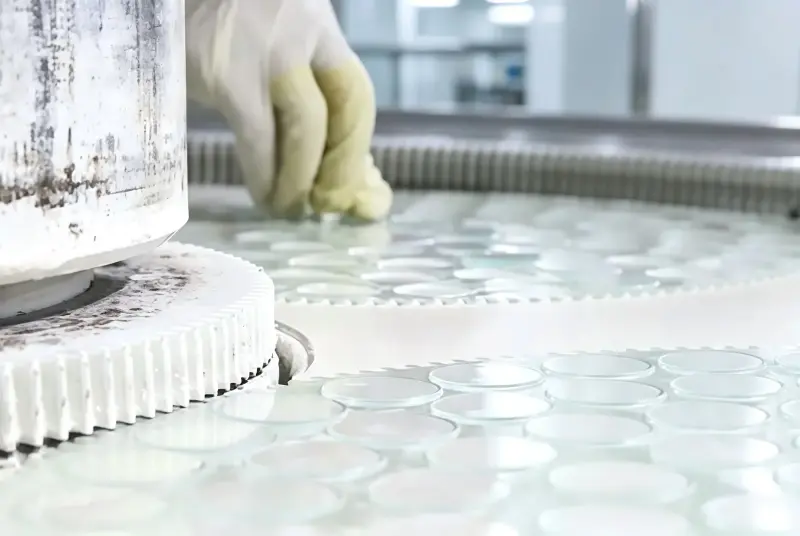
Glass edge grinding & polishing
Glass edge grinding and polishing optimizes edges to boost safety, practical performance, and overall appearance. Grinding eliminates sharp edges and surface defects, and polishing yields a perfectly smooth edge surface. Through this treatment, custom glass panels become safer to handle, more long-lasting and visually attractive for countless applications. Weiman Tech delivers upgraded processing solutions with custom edge profiles and finishes engineered to fit your glass designs accurately. Get in touch with us to talk through your project needs.
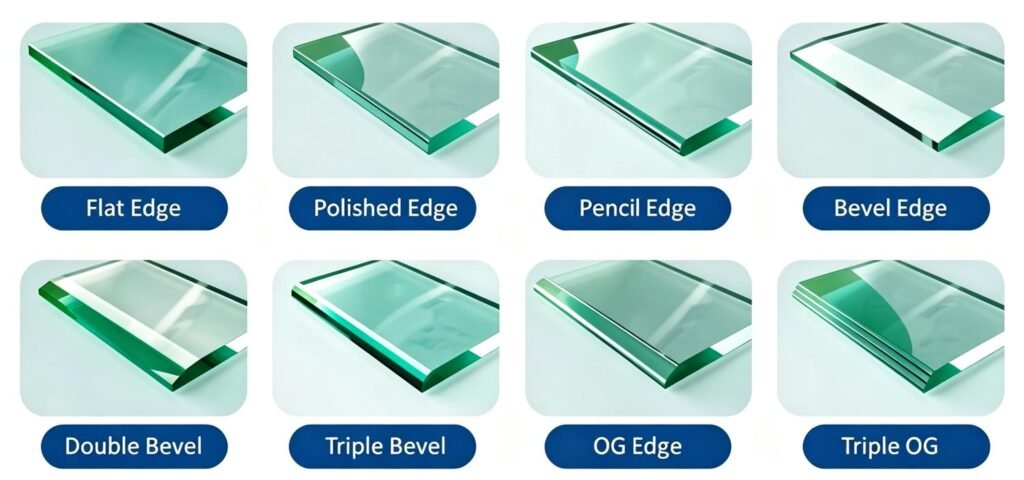
Different edging & polishing options
As an established manufacturer specializing in custom glass, Weiman Tech supplies comprehensive edge grinding and polishing solutions for custom glass, catering to varied design requirements across numerous cover glass applications.
Your Cover Glass Solutions Partners
As an experienced manufacturer specializing in customized tempered glass with self-owned production facilities, Weiman Tech delivers tailored glass processing and edge finishing services according to your unique drawings and specifications.
- MOQ: The majority of our items come with no minimum order requirement.
- Pricing: We do not maintain fixed price sheets, every quotation prepared individually for custom orders.
- Artwork: Vector files including AI, CAD, PDF, and other compatible formats are required.
We can develop customized edge grinding and polishing schemes aligned with your actual application demands. Feel free to consult our professional engineering team.
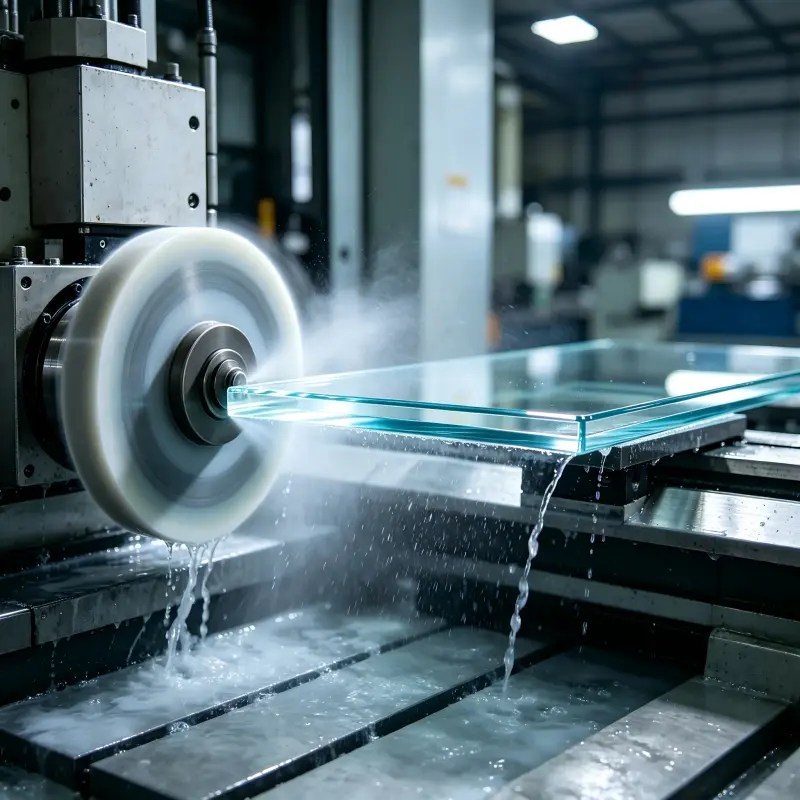
Custom Glass Edge Grinding & Polishing Technical Options
| Glass Thickness | 0.2~22MM; |
|---|---|
| Glass Processing Dimensions | Maximum: 3660*2400MM; |
| Tolerances | ±0.02mm |
| Edgeworks and Grinding Corners Available | Cutting, Edging, Hole-drilling, etc. |
What you need to know about glass edge grinding & polishing
Edge finishing via grinding and polishing serves as an indispensable procedure in cover glass panel production, covering core advantages including safety enhancement, long-term durability, visual refinement and cost efficiency. Understanding these key influencing factors help optimize your cover glass design schemes and deliver premium-quality finished products.
1.Edge treatment through grinding and polishing serves as an indispensable procedure in cover glass panel production, covering core advantages including safety enhancement, long term durability, visual refinement and cost efficiency. Understand these key influencing factors can help optimize your cover glass design schemes and delivery premium quality finished products.
2.Identifying Common Glass Edge Grinding Defects
Strict edge inspection is essential to guarantee the finished quality of cover glass panels. Manufacturers and designers need to watch out for these typical edge processing flaws during quality checks:
- Chipping:Tiny fragments peeling or breaking off from glass edges, usually caused by improper grinding operation or external collision.
- Bright Edges:Over-polished edge sections that form overly glossy, highlighted zones with an obvious brightness difference from other parts of the glass surface.
- Surface Scratches:Streaky linear blemishes appearing on the polished edge surface, resulting from unpolished debris or improper polishing tools.
- Pitting:Minute concave dents and tiny sunken spots distributed unevenly on the glass edge, affecting both flatness and appearance.
- Grinding Traces:Obvious linear tool marks left by the grinding wheel during processing, which fail to be eliminated by subsequent polishing procedures.
- Grinding Texture Patterns:Regular repeated fine line textures generated by the continuous operation of the grinding wheel, forming inconsistent surface patterns on glass edges.
Safety performance, service durability, visual aesthetics and cost control all hinge on the grinding and polishing processes of cover glass panels. Mastering these essential design considerations enables you to refine glass panel designs and attain outstanding manufacturing outcomes.
3.Why is Edge Chamfering So Important for Glass Panels?
Edge chamfering, commonly referred to as glass beveling, is a specialized processing technique that grinds and polishes glass edges to form subtle angled or rounded finishes.
- Enhanced Operational Safety:Raw glass features sharp 90-degree straight edges that pose significant cutting risks during handling and usage. Chamfering effectively eliminates such safety hazards by smoothing out harsh edges and forming soft angled or rounded contours.
- Improved Edge Protection & Longer Lifespan:Untreated sharp glass edges are highly susceptible to chipping, cracking and edge damage under minor impact or friction. Edge chamfering reinforces the structural integrity of glass edges, greatly boosting damage resistance and prolonging the overall service life of glass panels.
- Elevated Visual Appeal:Beyond functional advantages, chamfering delivers a polished, sophisticated finish to glass panels. It upgrades the overall texture of the product, presenting a neater, more professional and high-end visual effect.
4.A Guide to Common Glass Edge Finishes
Edge profiling is far more than a final trimming step—it defines the tactile feel, visual character, and safety level of your glass panels. Below is a breakdown of the most widely used edge types:
- Flat Edge (Chamfered) – A clean, straight cut complemented by a subtle micro-bevel that removes sharpness while keeping the look minimal and modern.
- Seamed Edge – A cost-effective, quick-grind treatment that delivers the most basic level of edge safety by knocking off rough burrs.
- C-Edge – Shaped like the letter “C,” this gently curved profile offers a natural resting point for fingers, making it especially comfortable for handheld devices.
- R-Edge – A fully rounded, semicircular contour that maximizes softness to the touch and provides the highest degree of impact resistance and user protection.
- 2.5D Edge – A sophisticated sweeping curve that flows organically into the glass surface, giving the piece a fluid, premium aesthetic with no abrupt transitions.
- Beveled Edge – An angular, sloped cut that catches light beautifully, adding a distinct decorative flair that elevates the overall design.
5.The Impact of Surface Polishing on Glass Substrate Dimensions
Surface polishing is a finishing process predominantly employed to eliminate superficial defects, such as micro-scratches and light haze, rather than to induce macroscopic dimensional changes. In practice, the resultant reduction in glass thickness is typically negligible, often falling well within the manufacturing tolerances of the raw substrate. The primary objective is to enhance optical clarity and surface evenness, with any material removal being sub-micron in scale.
It is important to note that this process is not universally applied across all glass products. Within the industry, polishing is generally reserved for high-value panels destined for specific applications, including:
- High-resolution display screens and touch panels;
- Precision optical instruments and measurement devices;
- Other critical components where surface integrity directly influences functional performance.
6.What Drives the Cost of Glass Edge Finishing?
When budgeting for glass edge grinding and polishing, it’s helpful to break down the contributing factors. These elements not only shape the final price tag but also guide the feasibility of your design.
Here’s a quick breakdown of what influences cost:
- Shape Complexity: The more elaborate the outline, the higher the machining effort—and the cost.
- Size and Bulk: Bigger and thicker pieces take more time to process, adding to the expense.
- Production Volume: Ordering in larger quantities reduces the cost per piece, thanks to streamlined workflow.
- Accuracy Demands: Stricter tolerances require slower, more careful processing, which drives up labor and inspection costs.
- Finish Quality: A high-gloss or ultra-smooth surface requires extra polishing steps, which naturally raises the price.
Additionally, certain design details can complicate the job significantly. For example, holes located near edges, internal notches with small radii, non-symmetrical forms, or extremely thin and delicate structures all demand special handling. These intricacies not only increase costs but can also lengthen the overall production schedule.
Why Zilang Tech?
From prototype to mass production, our grinding and polishing expertise ensures every piece meets your exact requirements—consistently, reliably, and efficiently.
Safety-first edges
free of sharpness and stress points
Standards-compliant quality, backed by rigorous inspection
From prototype to mass production, our grinding and polishing expertise ensures every piece meets your exact requirements—consistently, reliably, and efficiently.
Tight Tolerances, Absolute Precision
Our in-process quality controls are rigorous and unremitting. From raw material inspection to final verification, every panel is measured against your exact specifications—so you receive components that fit, function, and perform without deviation.
Any Profile. Any Complexity.
From basic edge seaming to intricate custom geometries, our expertise covers the full spectrum. Whatever your design calls for—straight lines, tight radii, or asymmetrical contours—we deliver with consistent accuracy and a flawless finish.
Speed + Quality = Superior Value
Advanced equipment meets experienced craftsmanship in our workshop. The result: premium edge finishes delivered on accelerated timelines, at rates that respect your project budget. We don't make you choose between fast, good, and affordable—you get all three.
Visually flawless finishes
Visually flawless finishes that elevate product appeal
Precision Edges, Greater Worth
Our grinding and polishing expertise produces clean, accurate contours that elevate visual appeal while reinforcing structural integrity. The result? Safer, tougher glass panels that command higher value in your end products.
Tailored to Your Needs
We begin by listening—understanding your performance targets, design constraints, and cost parameters. From there, we engineer edge grinding and polishing processes that fit your project precisely, not the other way around.
Any Glass, One Standard of Excellence
Soda-lime, borosilicate, aluminosilicate, or specialty substrates—we've processed them all. Our broad material expertise means you're free to select the optimal glass for your application, confident that our grinding and polishing techniques will bring out its best performance.
CNC Glass Machining at Scale
Our shop floor houses over a dozen advanced CNC centers, purpose-built for high-tolerance glass processing. From precision cutting and engraving to complex drilling and edge profiling, we execute intricate geometries that conventional methods simply cannot achieve—with consistency that sets us apart.
Full in house manufacturing facilities Complete material options All markets can serve
- Cutting
- thermally tempering
- chemically strengthening
- Silkscreen print
- UV print
- Ultrasonic cleaning
- Grinding & polishing
- coatings
- optical bonding
- hole drilling
- inspection
- packaging
CNC Glass Solutions
With more than 10 years’ advanced machining centers, we offer high-precision cutting, engraving, drilling and edge grinding. Our technology handles intricate designs and tight tolerances that traditional glassworking can’t achieve—delivering superior results, project after project.
Cutting
Precision CNC cutting delivers accurate dimensions and complex shapes from a wide range of glass sheet types, ensuring clean, burr-free results.
Engraving
Creates intricate patterns, corporate logos, and permanent markings with exceptional clarity and fine detail on glass surfaces.
Edge Finishing
Produces smooth, polished edges that enhance product safety, aesthetic appeal, and functional durability.
Grooving
Machines precise channels and grooves to accommodate inlays, wire routing, structural joints, and assembly features.
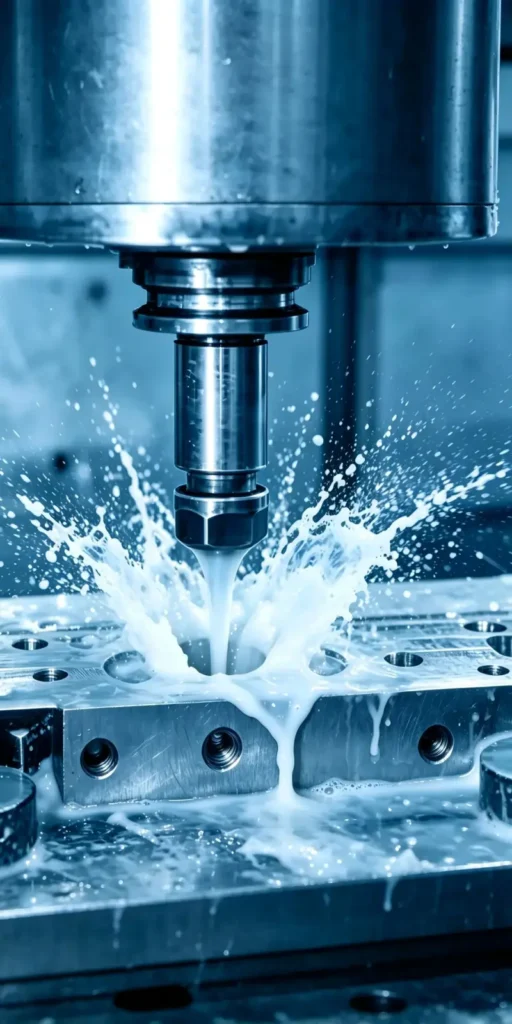
Drilling
Forms clean, accurate holes for mounting hardware, mechanical connections, or design accents, with minimal edge chipping and stress fractures.
Shaping
Fabricates complex curves, contours, and non-standard geometries for custom designs and specialized functional applications.
Surface Polishing
Restores and enhances glass clarity, surface smoothness, and optical light transmission for superior visual performance.
Prototyping
Delivers fast-turnaround functional prototypes to support design validation, fit testing, and performance evaluation before full production.
Request A Free Quote
We respect your confidentiality and all informations are protected
Contact Us
Send us a message if you have any questions, request a quote or free samples.Our experts will give you a reply within 24 hours and help you select the right cover/panel material as your request.
Phone
kimi@zlcoverglass.com
Address
ZILANG,DONGGUAN,GUANGDONG 523000,CHINA