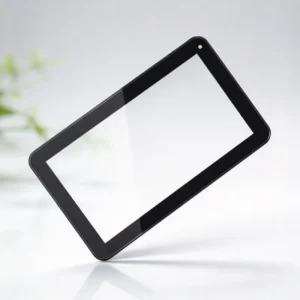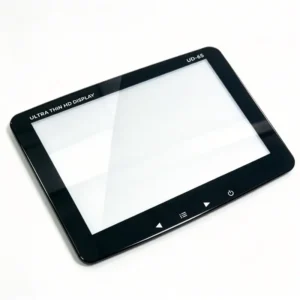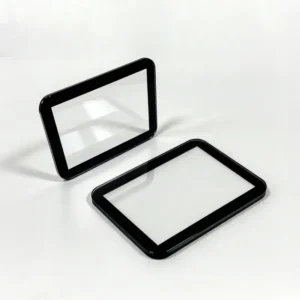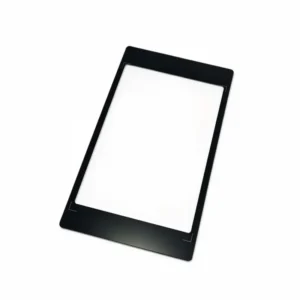
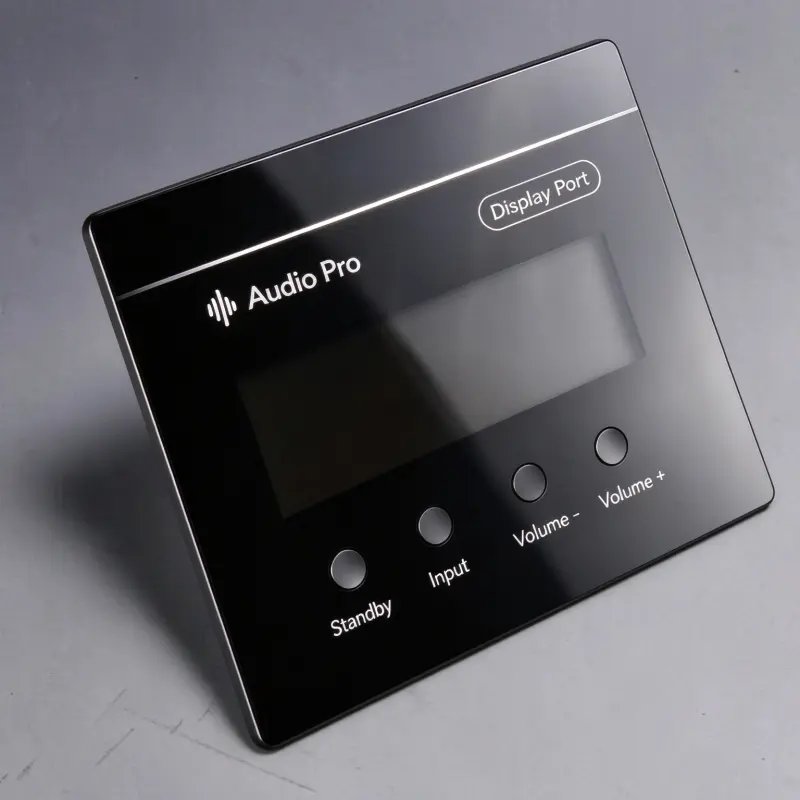
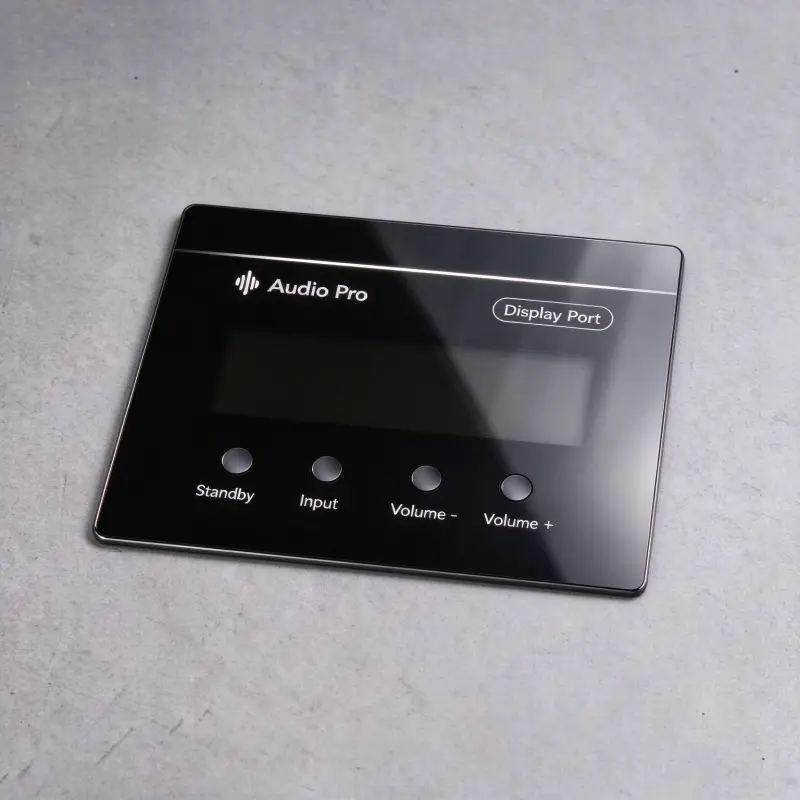
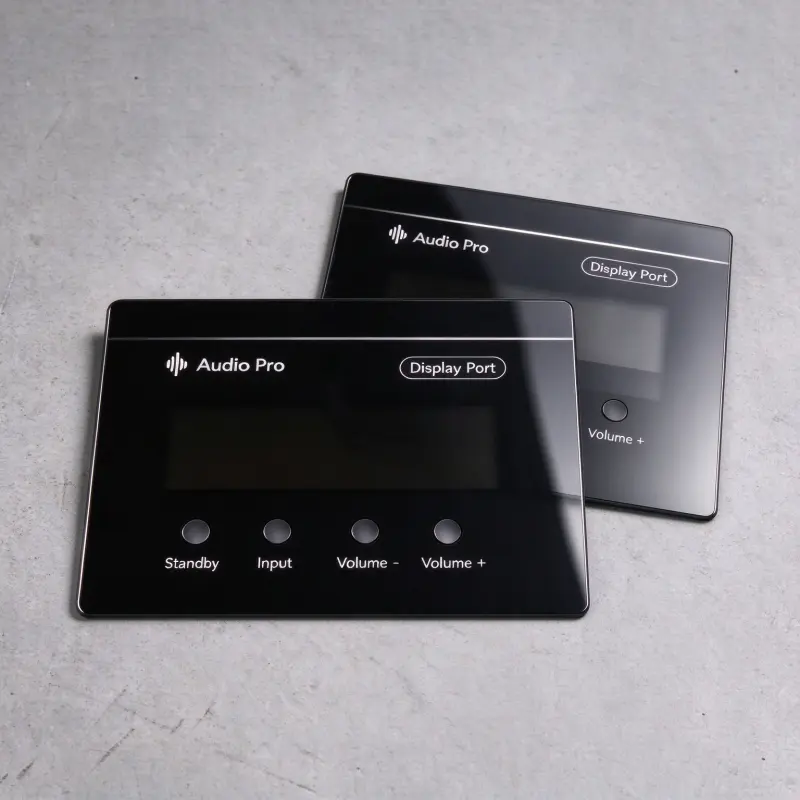
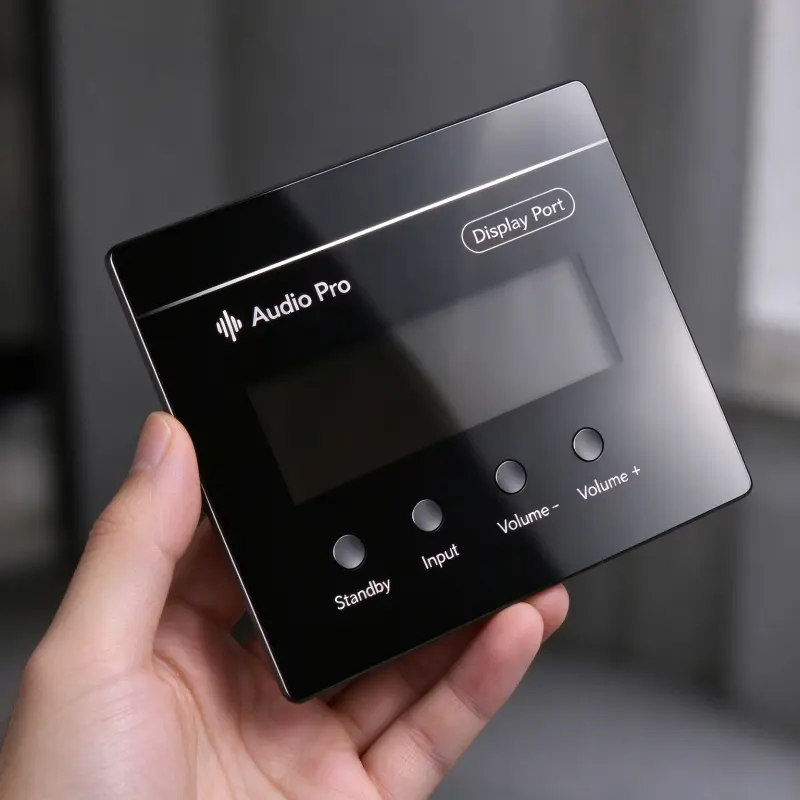
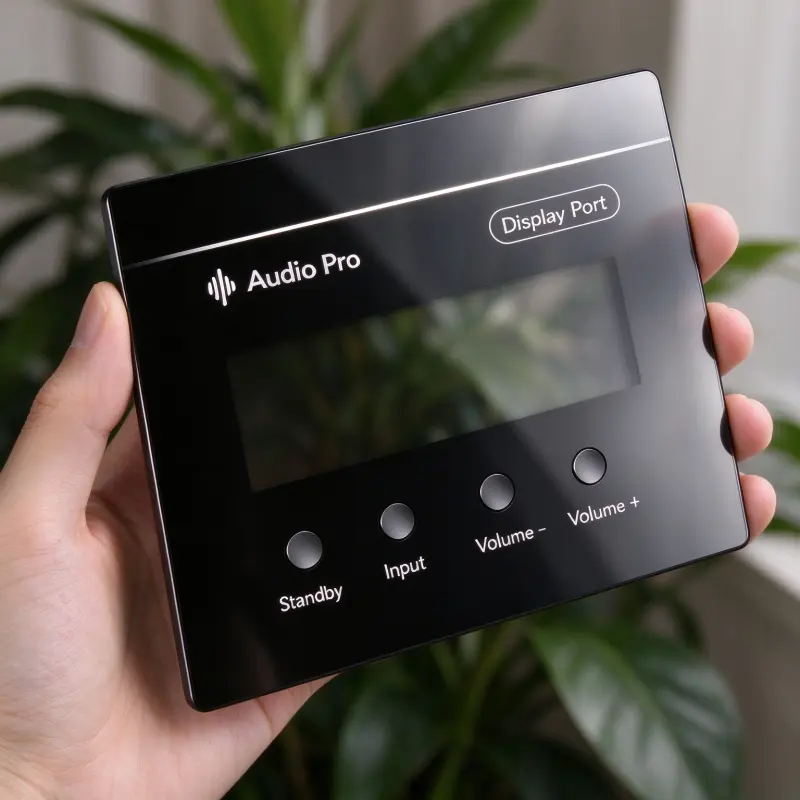

For OEM projects, the glass panel should be considered together with the housing, display, touch interface and assembly method. This helps ensure that printed graphics, functional areas and mounting features are correctly positioned in the finished product.
Printed Glass Control Panel Design Options
Screen-Printed Icons and Labels
Operating icons, function symbols, text and other markings can be printed onto designated areas of the glass. Artwork should define the position, size and color of each graphic to maintain alignment with the equipment interface.
Colored Borders and Concealed Areas
Printed borders can cover selected areas around the display or conceal internal components behind the glass. Black is a common design choice, although other colors may be specified according to the product’s visual requirements.
Transparent Display and Indicator Windows
Specific areas can be left transparent to allow light from an LCD, LED indicator or other display component to pass through. The transparent areas must be coordinated with the printed artwork and the positions of the underlying components.
Custom Shapes and Openings
The glass outline may include rounded corners, mounting holes, slots or other cutouts required by the equipment design. These features should be defined in the engineering drawing and checked against the housing and assembly tolerances.
Applications of Printed Glass Control Panels
Home Appliances
Printed glass panels can be used for appliance interfaces that require clearly defined controls, decorative borders and a consistent front-panel appearance.
Industrial Control Equipment
Control interfaces for industrial equipment may require printed operating symbols, warning labels, status indicators and designated display windows. The graphics should be aligned with the control layout and operating requirements.
Commercial Electronic Equipment
Self-service equipment, commercial machines and other electronic products may use printed glass panels to combine a finished exterior surface with functional markings and display areas.
Touchscreen Control Interfaces
For touch-enabled products, printed graphics must be coordinated with the active touch area. The glass thickness, optical properties and printing layout should be reviewed against the touchscreen design.
Customization and Manufacturing Options
Glass material: Soda-lime or aluminosilicate glass, depending on the design and performance requirements.
Glass thickness: Selected according to the panel dimensions, installation method and structural requirements.
Screen printing: Custom borders, icons, text, logos and functional graphics.
Transparent windows: Defined areas for displays, indicator lights or optical components.
CNC machining: Custom outlines, holes, slots and other specified features.
Edge processing: Ground, polished or otherwise finished edges according to the drawing.
Glass strengthening: Chemical strengthening or thermal tempering may be considered where suitable for the selected material and thickness.
Surface treatments: Anti-fingerprint, anti-glare or anti-reflective options may be evaluated according to the intended application.
Adhesive assembly: Compatible adhesive tapes or bonding solutions can be assessed against the assembly design.
The available process sequence and achievable specifications should be confirmed for each project.
Technical Specifications to Confirm Before Ordering
| Specification | Information to Provide |
| Glass material | Preferred material or required performance |
| Glass thickness | Nominal thickness and tolerance |
| Panel dimensions | Overall length, width and shape |
| Cutouts and holes | Position, size and tolerances |
| Printing artwork | AI, PDF, CAD or other agreed artwork format |
| Printed colors | Color references and acceptable variation |
| Transparent areas | Display windows, indicator areas and clear zones |
| Edge requirements | Grinding, polishing and corner details |
| Surface treatment | Required finish and optical properties |
| Quantity | Prototype, sample or production volume |
| Assembly method | Mounting, adhesive bonding or other installation details |
For multi-color printing or panels with several transparent windows, a dimensioned drawing and approved artwork are particularly important. The production sample should be checked for graphic alignment, color appearance, window positioning and fit with the intended assembly.
What Affects Printed Glass Panel Quality?
Artwork alignment: Printed graphics must match the glass outline, cutouts and positions of the underlying display or control components.
Color consistency: Printed colors should be specified and reviewed using agreed samples or color references. The appearance can vary with the glass substrate, printing process and viewing conditions.
Window accuracy: Transparent areas must align with the display, sensor or indicator behind the glass.
Edge and surface condition: The glass should be inspected for defects relevant to the agreed specification, including edge damage, surface marks and printing imperfections.
Assembly fit: Hole positions, panel dimensions and adhesive placement should be checked against the device drawing before production approval.
Frequently Asked Questions
What is a printed glass control panel?
It is a glass panel with customized printed graphics, labels, borders or functional windows for an electronic device’s front interface.
Can icons and text be printed directly on the glass?
Screen printing can be used for icons, labels, logos and other graphics. The artwork, colors and printing areas should be confirmed before production.
Can the panel include transparent windows?
Yes. Specified areas can remain transparent for displays, indicator lights or other components. Their dimensions and locations should be included in the drawing and artwork.
Can printed glass control panels be customized with holes and cutouts?
Yes, where supported by the selected material and manufacturing process. Hole positions, cutout dimensions and edge requirements should be specified in the engineering drawing.
Can the glass be strengthened after printing?
The appropriate processing sequence depends on the glass material, ink system and strengthening method. It should be confirmed with the manufacturer before finalizing the design.
What files are needed for a quotation?
Provide a dimensioned drawing, printing artwork, glass thickness, material preference, required surface treatment, quantity and assembly requirements. A reference sample can also help clarify appearance and functional details.
Request a Printed Glass Control Panel Quote
Send your glass drawing and printing artwork for a project review. Include the panel dimensions, thickness, color requirements, transparent windows, cutouts and estimated quantity so that the appropriate glass and processing options can be evaluated for your equipment.