
Custom Black Glass Panel for Control Systems
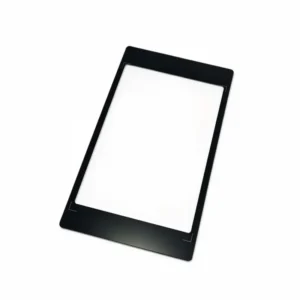
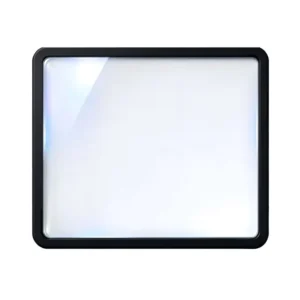
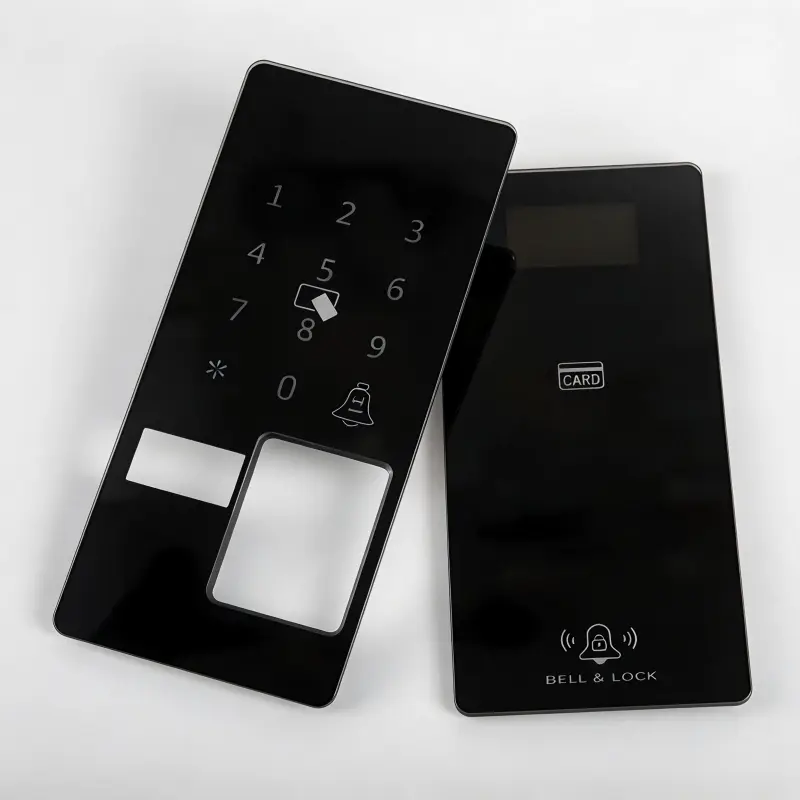
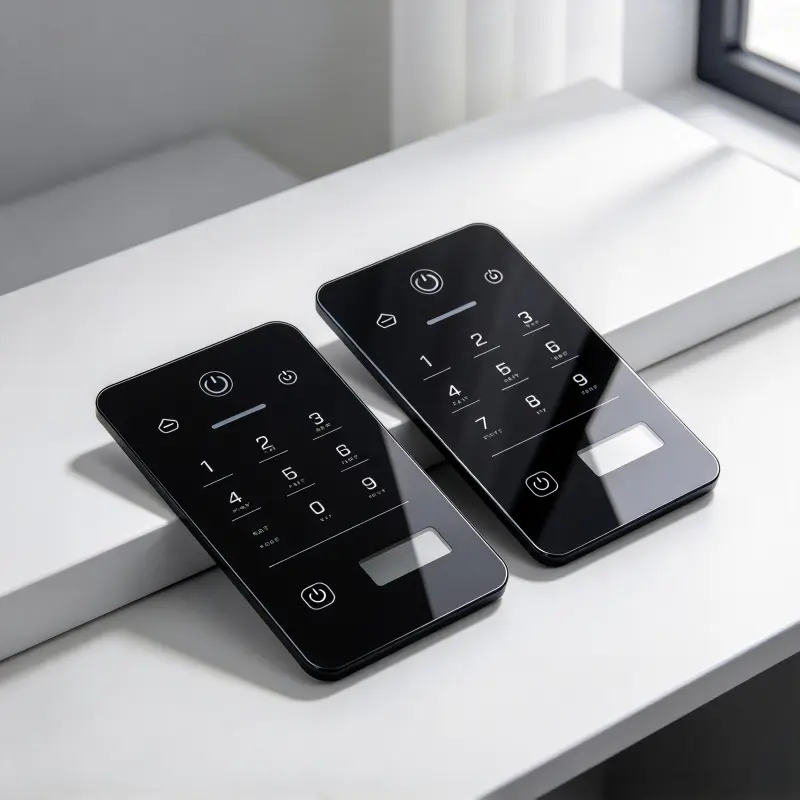
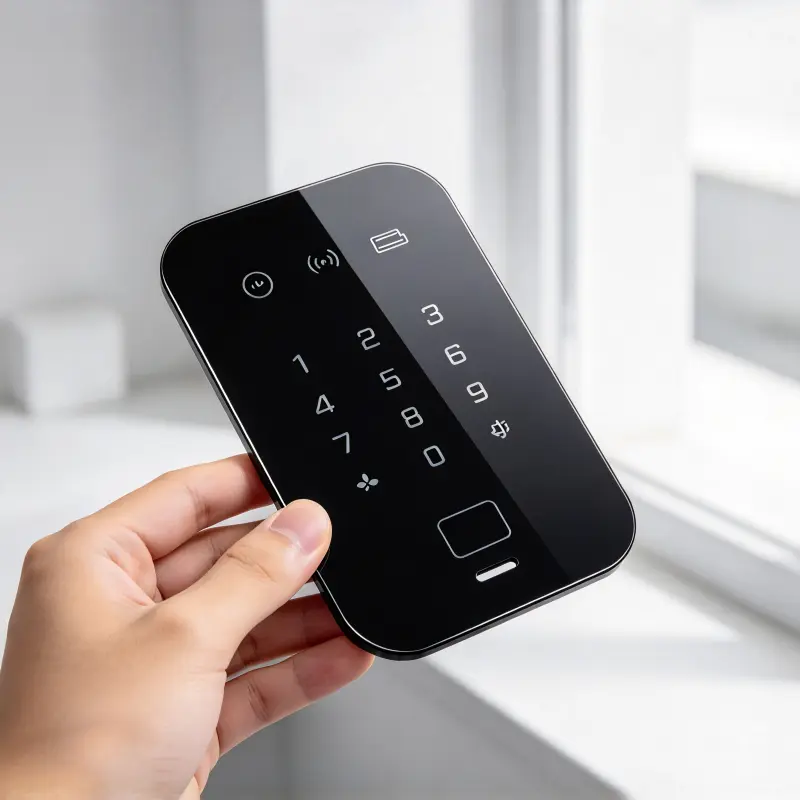
Black glass panels are used where the front of a machine or electronic device needs a consistent, modern finish. They can surround a display, define the active viewing area or integrate with the design of an equipment enclosure.
Unlike a standard glass sheet, a custom control panel may require several features to work together. The outside dimensions must match the enclosure, holes must align with mounting points, and printed borders must leave the correct areas visible.
ZL Cover Glass can review the specified glass shape, dimensions, printing layout and machining requirements to determine a suitable configuration for the intended product.
Typical applications include:
- Industrial machine control panels
- Human-machine interface (HMI) equipment
- Electronic equipment front panels
- Instrument and measurement interfaces
- Smart home controllers and wall-mounted control units
- Custom display and touch-control assemblies
Glass Customization and Processing Options
1. Custom Dimensions and CNC Glass Machining
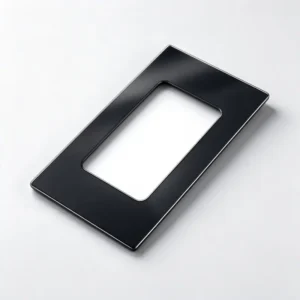
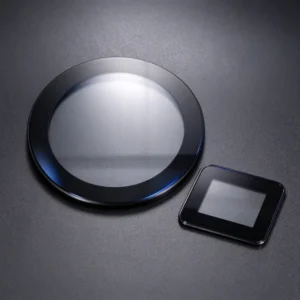
Control panels often need more than a standard rectangular shape. Depending on the design, the glass may require custom outside dimensions, rounded corners, notches, cutouts or mounting holes.
CNC glass machining can be specified for suitable geometries where dimensional accuracy and feature positioning are important. The drawing should identify critical dimensions, tolerances, corner radii and the relationship between holes and reference edges.
For replacement panels, provide the original dimensions or a sample where possible. This helps clarify the shape and mounting details before production requirements are finalized.
2. Black Silk-Screen Printing and Decorative Details
Black printing can define the visible display area and create a consistent appearance across the front of a control system. Depending on the artwork and process, printed features may include:
- Black borders around display windows
- Logo and brand markings
- Button labels and operating icons
- Indicator symbols and functional markings
- Custom patterns and decorative areas
The print drawing should show the exact position and dimensions of each feature. For panels with a transparent display window, the printed area must be coordinated with the active screen region.
Ink selection and printing conditions should be confirmed according to the glass specification and intended service environment.
3. Mounting Holes, Cutouts and Edge Finishing
A glass panel must fit its mechanical assembly without interfering with buttons, connectors, displays or fasteners.
Depending on the project, processing requirements may include drilled holes, shaped cutouts, polished edges and specified corner profiles. Hole diameter, edge distance and dimensional tolerances should be defined on the engineering drawing.
The glass thickness, hole geometry and installation method must be considered together. Where the panel is exposed to mechanical stress, the design should be reviewed for suitable edge quality and strength requirements.
4. Glass Material and Strengthening
Glass material and thickness affect the design, weight and mechanical performance of the finished panel. Soda-lime glass and aluminosilicate glass may be considered according to the required specifications and processing compatibility.
Chemical strengthening or thermal tempering may be options for suitable designs, subject to material compatibility, geometry and project requirements.
The appropriate choice depends on the panel size, mounting structure, expected handling and required performance. Strengthening should be specified as part of the overall design rather than treated as a substitute for suitable mechanical support.
5. Surface Finishes for Control Interfaces
The required surface finish depends on how the control panel will be used.
Clear glass may be appropriate when the design prioritizes a transparent viewing area. Anti-glare (AG) treatment may help diffuse reflected light, while anti-reflective (AR) treatment is intended to reduce surface reflection. Anti-fingerprint (AF) treatment may be considered where fingerprint visibility and cleaning are concerns.
These treatments have different characteristics and should not be treated as interchangeable. Availability, compatibility with black printing and the required optical performance should be confirmed for each project.
Custom Black Glass Panel Specifications
The following parameters can be defined during project review.
| Specification | Project requirements |
| Glass type | Soda-lime glass or aluminosilicate glass, as specified |
| Thickness | Defined according to the design |
| Overall dimensions | Custom length, width and shape |
| Printed areas | Black borders, logos, icons and markings |
| Display window | Position and dimensions of the visible area |
| Mounting features | Holes, notches and cutouts, where required |
| Edge treatment | Polished edges or other specified profiles |
| Surface finish | Clear, AG, AR or AF, subject to availability |
| Strengthening | Chemical strengthening or thermal tempering, where suitable |
| Order requirements | Prototype quantities and production quantities for review |
Final specifications should be confirmed against the technical drawing, processing feasibility and required inspection criteria.
Manufacturing Coordination and Quality Requirements
A custom black glass panel involves several connected requirements. A correct outside dimension is not enough if the printed border obscures the display, the holes do not align with the enclosure, or the surface finish differs from the intended appearance.
For this reason, the project specification should identify the critical features before production.
Depending on the agreed supply arrangement, the manufacturing process may involve glass cutting, CNC machining, edge finishing, printing, strengthening and surface treatment. The actual process sequence depends on the selected material and finish.
Quality requirements should be defined for the features that matter to the assembly, including:
- Overall dimensions and thickness
- Hole and cutout positions
- Edge condition and visible defects
- Printed border dimensions and alignment
- Surface appearance and cleanliness
- Any specified optical or mechanical performance criteria
Inspection methods and acceptance limits should be agreed before production. If the panel must match an existing component, a sample review or first-article approval may be appropriate.
OEM Customization for Control Panel Manufacturers
For OEM projects, the glass should be designed around the finished equipment rather than selected as an isolated component.
ZL Cover Glass can assess customization requirements using the customer’s drawing, sample or defined specifications, subject to the available manufacturing capabilities and agreed supply scope.
To prepare a quotation, please provide:
- A 2D drawing or dimensioned sketch of the glass panel.
- Glass material and thickness requirements, if already defined.
- Black border dimensions and printing artwork.
- Display window, mounting hole and cutout locations.
- Edge finishing and surface treatment requirements.
- Applicable tolerances and inspection criteria.
- Prototype quantity, estimated annual demand and delivery destination.
If the design is still under development, the preliminary drawing and intended application can be used to begin a feasibility review. Unconfirmed requirements can then be clarified before the final specification is approved.
Frequently Asked Questions
Can you manufacture a black glass control panel from a drawing?
Custom panels can be evaluated from technical drawings or defined dimensions. Feasibility depends on the glass material, panel geometry, printing layout and required processing. Submit the drawing for review before confirming the final specification.
Can the glass include a black border and a transparent display window?
The printing layout can be designed to include black borders and designated viewing areas, subject to the selected printing process. The artwork should clearly identify the visible screen area and all printed regions.
Can mounting holes and irregular shapes be customized?
Custom holes, cutouts and shaped outlines may be possible depending on the geometry, thickness and manufacturing limits. Provide the required dimensions, tolerances and edge distances on the drawing.
What is the difference between AG and AR glass?
AG treatment diffuses reflected light to reduce distracting glare, while AR treatment reduces reflection through an optical coating. The best option depends on the display, lighting conditions and optical requirements.
Can black glass panels be chemically strengthened or tempered?
Strengthening options depend on the glass composition, dimensions, geometry and processing requirements. The suitable method should be confirmed for the specific panel design.
What information is needed for an OEM quotation?
A drawing, glass thickness, overall dimensions, printing layout, mounting features, surface finish and estimated quantity are the most useful starting points. If some specifications are not yet available, identify the requirements that still need to be determined.
Request a Quote for Custom Black Glass Panels
Looking for a glass front panel for an industrial control system, HMI or electronic equipment interface?
Send ZL Cover Glass your drawing, dimensions, printing artwork and estimated quantity. We can review the specified machining, printing and finishing requirements and discuss a suitable supply arrangement for your project.