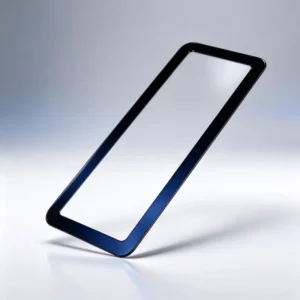
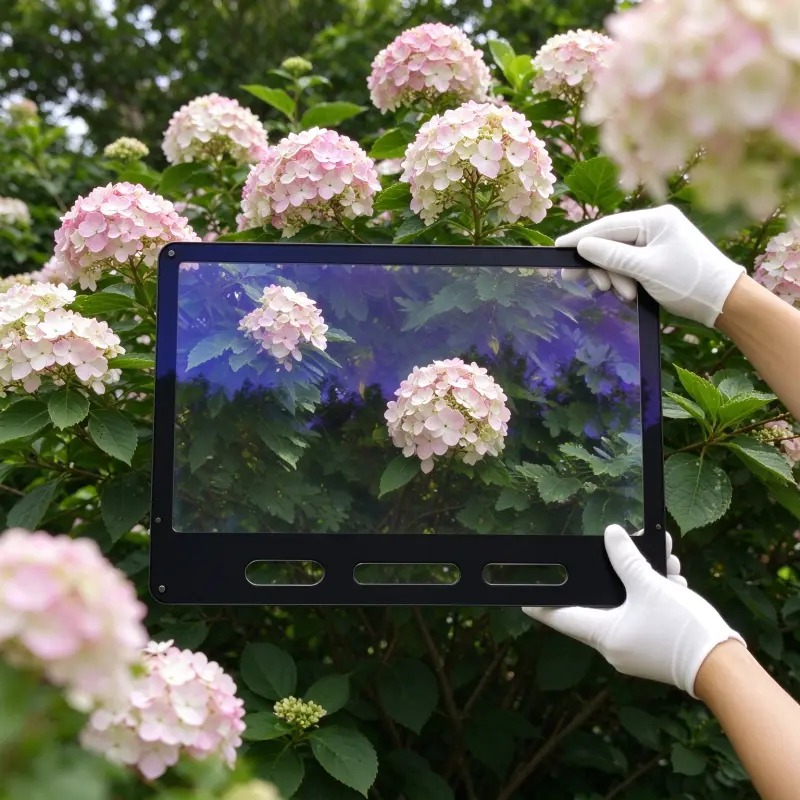
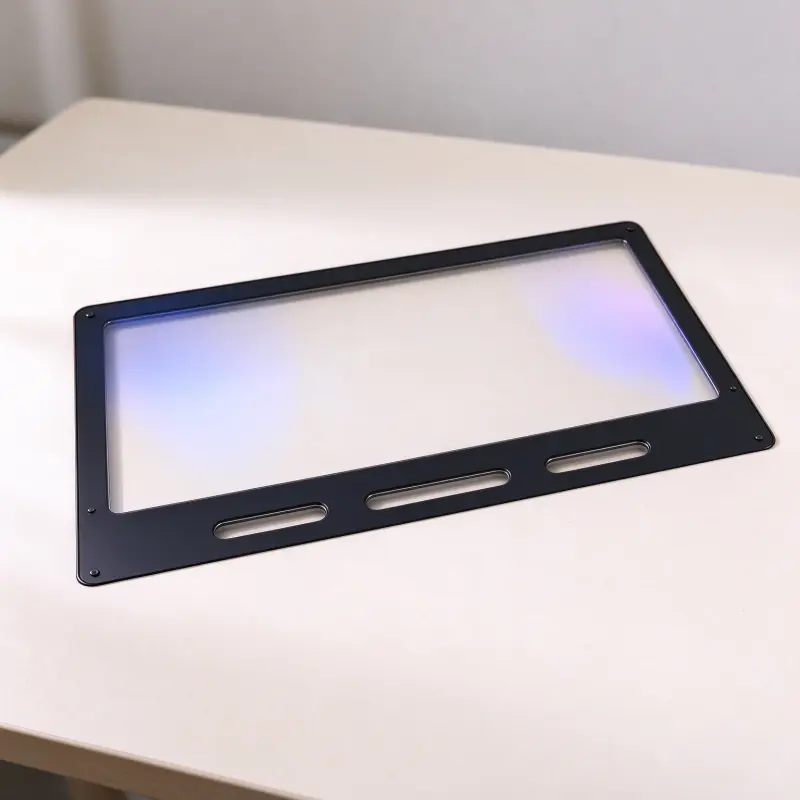

Custom Anti-Reflective Glass for Optical Equipment
An optical window is not simply a flat piece of transparent glass. Its performance depends on the wavelength of the incoming light, angle of incidence, substrate material, coating design and installation position.
For a window installed in front of an optical sensor, for example, the reflection requirement may differ from that of a viewing window used by an operator. The coating should therefore be selected according to the actual optical path rather than by choosing a generic AR grade.
Available project requirements can include:
Soda-lime, borosilicate or other compatible optical glass substrates
Custom rectangular, circular or drawing-defined window shapes
Specified glass thickness and finished dimensions
Single-sided or double-sided AR coating, subject to design review
Ground, chamfered or polished edges, where applicable
Defined clear aperture and allowable surface defects
Optical transmission and reflection targets over an agreed wavelength band
Material availability and coating compatibility should be confirmed for each design.
Applications of AR Optical Window Glass
Inspection and Measurement Equipment
Inspection instruments may use a glass window to protect internal optical components from dust and accidental contact. Reducing surface reflection can help maintain the contrast of the optical signal passing through the window.
Optical Monitoring Systems
Monitoring equipment may incorporate a transparent window in front of a camera, detector or optical sensing component. The coating specification should account for the sensor’s wavelength range and the window’s angle of installation.
Laboratory and Analytical Instruments
Laboratory equipment may require a replaceable optical window with controlled dimensions and repeatable optical properties. For these projects, the drawing should identify the required clear aperture, mounting interface and any areas that must remain free of coating or markings.
Machine Vision and Industrial Inspection
Machine vision systems can use protective windows between the imaging optics and the working environment. The appropriate AR design depends on the illumination source, camera sensitivity, working distance and expected incidence angle.
What Should Be Specified Before Ordering?
A useful RFQ should include the following information:
- Wavelength range: Visible light, near-infrared or another defined spectral band.
- Optical target: Required transmittance, reflectance or an optical performance curve.
- Glass substrate: Material and thickness.
- Window geometry: Length, width, diameter, corner radius and edge details.
- Clear aperture: The usable optical area and any masked or coated regions.
- Installation conditions: Angle of incidence, mounting method and operating environment.
- Quantity: Prototype requirements and estimated production volume.
If you do not have a complete optical specification, provide the equipment application and available drawing first. The coating design and measurable acceptance criteria can then be reviewed with your engineering or coating supplier.
AR Optical Windows Made to Drawing
For OEM projects, the finished glass window must fit the mechanical housing as well as the optical design. Hole positions, edge chips, thickness tolerances and the location of the clear aperture can all affect assembly.
Send your drawing, substrate preference, operating wavelength and quantity for a feasibility review. Please identify any required optical test report or inspection standard in advance so that the quotation can be based on measurable requirements rather than an unspecified request for high clarity.
Frequently Asked Questions
What is AR glass for optical instruments?
It is glass with an anti-reflective surface treatment designed to reduce reflections over a specified wavelength range. The actual performance depends on the substrate, coating design and test conditions.
Should an optical window have AR coating on one side or both sides?
That depends on the optical design. If both glass-air interfaces contribute unwanted reflection, double-sided treatment may be considered. The coating configuration should be confirmed against the installation and cleaning requirements.
Can AR optical window glass be made to a custom drawing?
Custom shapes, dimensions and edge conditions can be assessed from a drawing. The available substrate, coating process and manufacturing tolerances must be confirmed for the particular design.
Can the same AR coating work for visible and infrared light?
Not necessarily. Coatings are designed for specified wavelength bands and incidence conditions. A visible-band coating should not be assumed to provide the required performance in the infrared range.
What information is needed for a quotation?
Provide the drawing, material, thickness, finished dimensions, wavelength range, optical targets, quantity and any special requirements for the clear aperture or mounting interface.
Request a Quote for AR Optical Window Glass
Send your optical window drawing and application requirements for review. Include the wavelength range, substrate, thickness, dimensions and expected quantity so the project can be assessed against its optical and mechanical needs.