
Glass Design for Coffee Machine Touch Interfaces
Coffee machines use different control layouts depending on their intended application. A home espresso machine may have a compact touch interface with several beverage icons, while a commercial coffee vending machine may require a larger glass panel covering multiple selection areas.
The glass should be designed to match the display and touch module rather than treated as a separate decorative component.
Typical design considerations include:
- Touchscreen compatibility: The glass thickness and construction should be selected according to the capacitive touch sensor and its required sensitivity.
- Display visibility: Clear viewing areas allow beverage selections, operating information, and status indicators to remain visible.
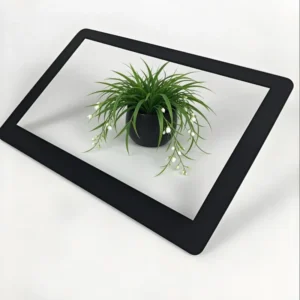
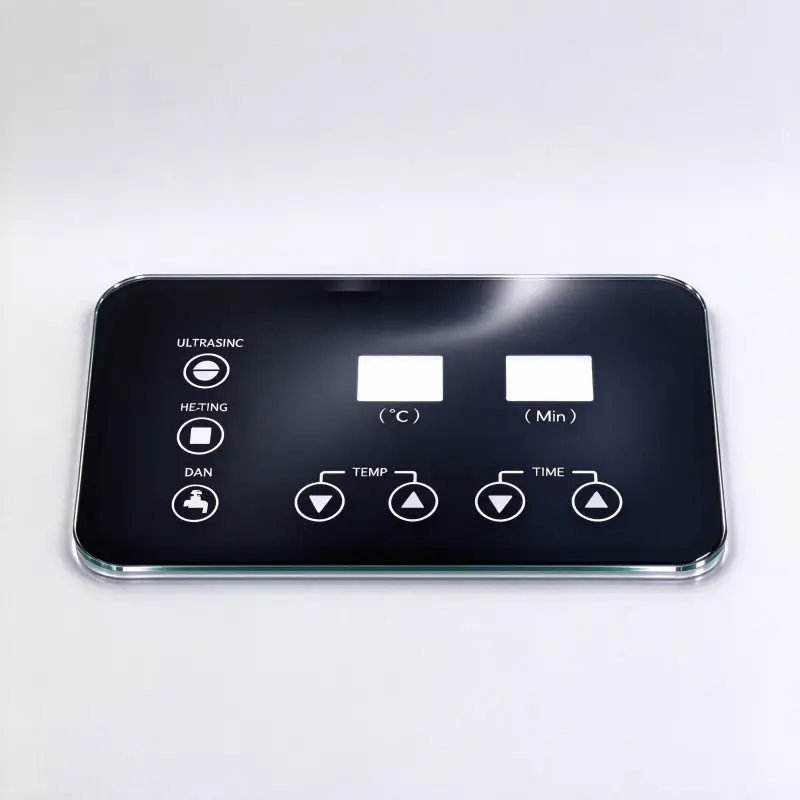
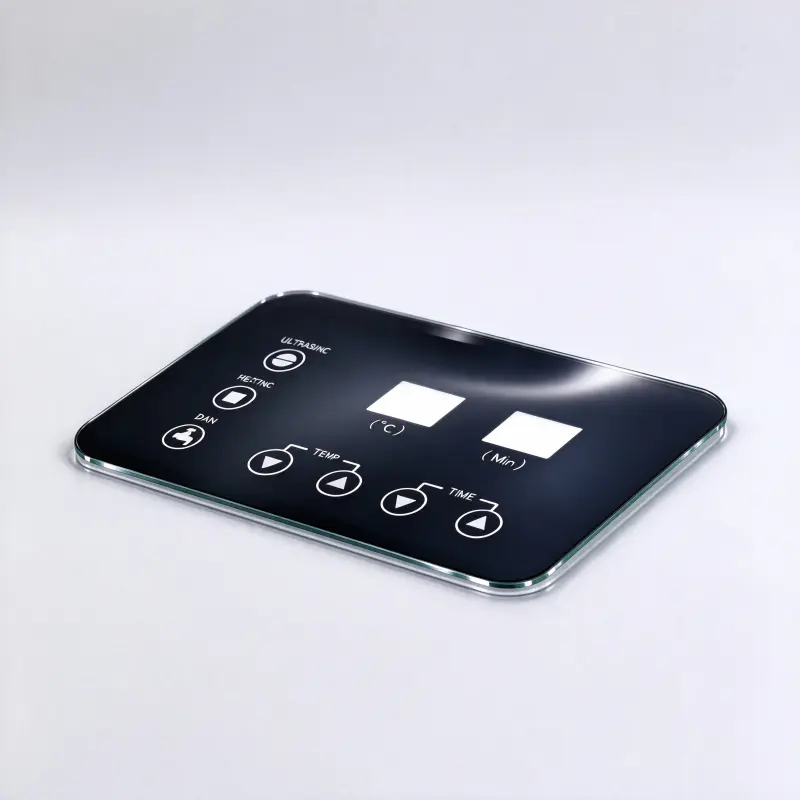
- Printed control graphics: Black borders, beverage symbols, logos, and functional markings can be screen printed on the glass.
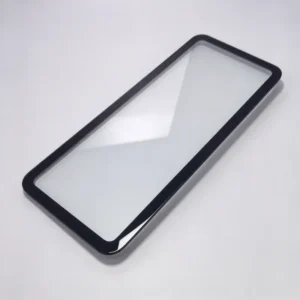
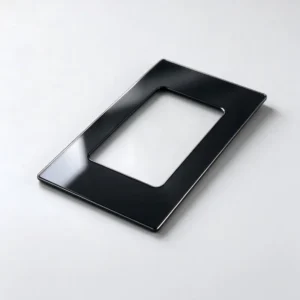
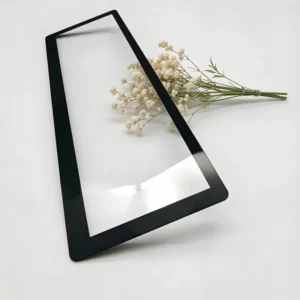
- Panel geometry: Rounded corners, custom outlines, cutouts, and mounting holes can be developed from technical drawings.
- Surface durability: The exposed surface should withstand repeated finger contact and routine cleaning.
For OEM manufacturers, coordinating these details before sampling helps reduce alignment problems during assembly.
Custom Black Printing and Display Windows
Black silk-screen printing is widely used in coffee machine control panel designs. It gives the front panel a consistent appearance and conceals the internal components behind the non-display areas.
The printing layout can include:
- Solid black decorative borders
- Transparent display windows
- Beverage selection icons
- White or colored operating symbols
- Brand logos and model identification
- Reserved areas for indicator lights and sensors
The printed pattern should be designed around the actual display and touch module. Transparent windows must remain correctly positioned, while printed areas should provide sufficient coverage to conceal internal components.
For more complex designs, customers can supply AI, PDF, or CAD artwork together with the glass drawing. Print colors, ink coverage, graphic alignment, and visible window dimensions can then be reviewed before sample production.
Glass Materials and Thickness Selection
The appropriate glass material depends on panel dimensions, thickness limitations, touch performance, and the equipment’s operating environment.
Clear soda-lime glass is suitable for many conventional control panel applications. Extra-clear glass can be considered when a cleaner appearance and reduced green tint are important, particularly around large transparent display windows.
For thinner and more demanding designs, chemically strengthened glass may be considered where the required dimensions and processing sequence are compatible.
Glass thickness should not be selected by appearance alone. It needs to be evaluated together with:
- Touch sensor specifications
- Display module construction
- Panel size and unsupported span
- Mounting and adhesive arrangement
- Required mechanical strength
- Available strengthening processes
The final specification should be confirmed through prototype evaluation with the customer’s actual touch module.
AF Coating for Frequently Used Control Panels
Coffee machine interfaces are touched repeatedly throughout the day. Fingerprints, oil marks, and cleaning residues can gradually affect the appearance of the front panel.
An anti-fingerprint (AF) coating can help reduce visible fingerprint marks and make routine surface cleaning easier.
Depending on the project, ZL can evaluate different surface finishes, including:
- AF coating for improved fingerprint resistance
- AG treatment for reducing distracting reflections
- AR coating for reducing surface reflection
- Combined surface treatments when compatible with the design
These treatments serve different purposes. AF does not replace proper cleaning, and AG should not be specified without considering the required display clarity and image sharpness.
For commercial coffee machines installed in restaurants, hotels, and self-service locations, the choice of surface treatment should reflect actual usage and cleaning conditions.
Edge Processing and Custom Panel Fabrication
A coffee machine glass panel often needs to fit into a compact front housing. Edge quality and dimensional consistency are therefore important for assembly.
Available processing options can be evaluated according to the drawing:
- CNC cutting for custom panel outlines
- Edge grinding and polishing
- Rounded corners and chamfers
- Precision drilling and cutouts
- Silk-screen printing
- Glass strengthening
- Surface coating
Mounting holes and cutouts should be reviewed carefully before tempering or chemical strengthening. Their dimensions, edge distances, and corner radii can influence the manufacturability and strength of the finished glass.
For panels using adhesive bonding, the edge finish and bonding area should also be considered during the design stage.
Applications of Custom Coffee Machine Glass
Custom coffee machine touch glass can be developed for different types of beverage equipment.
Commercial Espresso Machines
Front control panels with beverage selection graphics, display windows, and touch-sensitive areas for cafés, restaurants, and hospitality equipment.
Automatic Coffee Machines
Compact glass interfaces for automatic coffee makers with programmable beverage options and electronic displays.
Self-Service Coffee Vending Machines
Larger printed glass panels for payment interfaces, beverage selection screens, and machine status displays.
Hotel and Office Beverage Equipment
Custom glass front panels for coffee machines installed in shared kitchens, hotel breakfast areas, and office beverage stations.
Specialty Beverage Dispensers
Glass control interfaces for equipment offering multiple drink selections and automated dispensing functions.
OEM Manufacturing and Customization
ZL Cover Glass supports custom glass panel development based on customer drawings, samples, and functional requirements.
| Specification | Customization Options |
| Glass material | Clear glass, extra-clear glass |
| Thickness | Project-dependent |
| Glass processing | CNC cutting, grinding, polishing, drilling |
| Surface treatment | AF, AG, AR, subject to compatibility |
| Printing | Black, white, colored silk-screen graphics |
| Shape | Rectangular, rounded, irregular outlines |
| Strengthening | Chemical or thermal strengthening, depending on material and dimensions |
| Design input | CAD drawings, PDF artwork, physical samples |
The production process can include drawing review, material selection, glass cutting, edge processing, printing, strengthening, surface treatment, inspection, and protective packaging.
The exact process sequence depends on the selected material and required finish. Not every coating or printing combination is compatible with every strengthening process, so the manufacturing sequence should be confirmed during engineering review.
What to Include in Your Coffee Machine Glass RFQ
To receive a more accurate quotation, provide the following information:
- Glass length, width, thickness, and overall outline.
- Glass material preference, if already specified.
- 2D drawings or 3D design files.
- Black printing artwork and transparent display window positions.
- Touchscreen or display module information.
- Required AF, AG, or AR surface treatment.
- Edge finishing and hole specifications.
- Prototype quantity and expected production volume.
- Any mechanical, optical, or cleaning requirements.
If the glass is intended for an existing machine, a physical sample can also help confirm the dimensions and assembly arrangement.
ZL Cover Glass can review the supplied specifications and discuss suitable glass processing options for your project.
Request a Custom Coffee Machine Touch Glass Quote
Contact ZL Cover Glass with your drawings or sample requirements to discuss custom glass panels for coffee machines and beverage equipment.
Frequently Asked Questions
Can coffee machine touch glass be customized according to our machine design?
Yes. Glass dimensions, outline, thickness, printing artwork, cutouts, and surface treatments can be specified according to customer drawings and assembly requirements.
Can black silk-screen printing be combined with transparent display windows?
Yes. Black printed areas and transparent display windows can be incorporated into the same panel. Their positions should be aligned with the display module and touch interface before sampling.
Is AF coating suitable for commercial coffee machine panels?
AF coating can help reduce fingerprint visibility and make routine cleaning easier. Its suitability should be evaluated against the actual cleaning chemicals and usage conditions.
Can the glass support capacitive touchscreens?
Yes, provided that the glass thickness, material, coating, and sensor configuration are designed together. Touch sensitivity should be verified using the customer’s actual touch module.
What glass thickness is suitable for a coffee machine control panel?
There is no universal thickness. The selection depends on panel dimensions, touch sensor requirements, mounting structure, and mechanical strength targets.
Can you manufacture irregular-shaped coffee machine glass?
Custom outlines, rounded corners, and specified cutouts can be evaluated using CNC glass processing. Drawings are required to confirm feasibility.
Can you provide samples before mass production?
Sample development can be discussed based on the drawing, required processing, and project quantity. Sample approval is recommended before proceeding to volume production.
What information is needed for a quotation?
A drawing with dimensions, glass thickness, printing artwork, surface treatment requirements and estimated order quantity are the most useful starting points.