
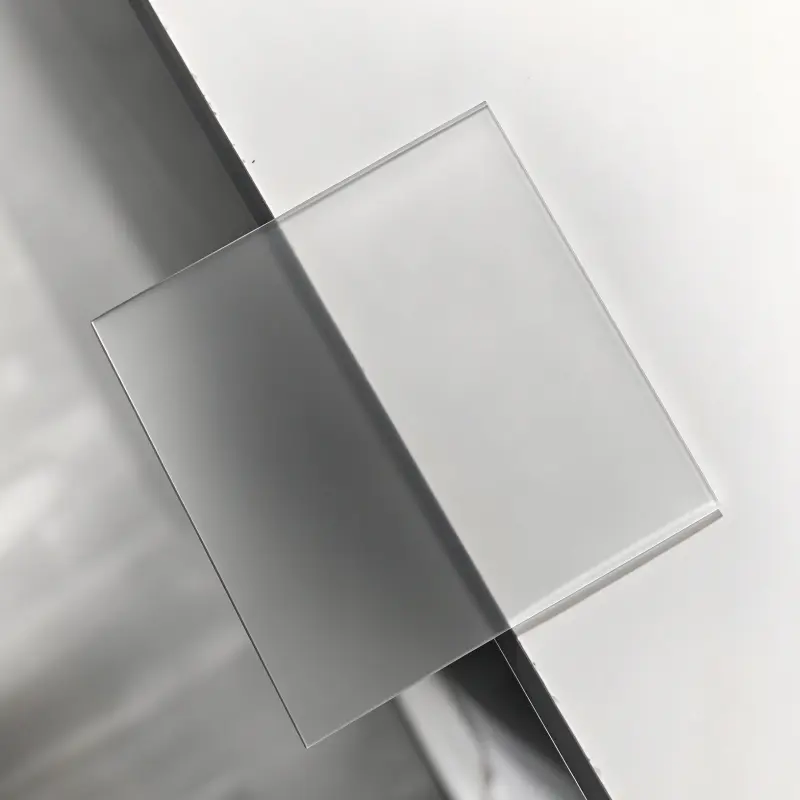
A display can have excellent brightness and contrast and still be difficult to read when strong light reaches its surface.
This problem is common in industrial control panels, outdoor equipment, information terminals, vehicle displays and other devices used under uncontrolled lighting conditions. Sunlight, ceiling lights, windows and nearby lamps can create reflections that compete with the information shown on the screen.
Anti-glare glass is one approach to reducing this problem. Instead of trying to eliminate reflected light completely, an anti-glare surface changes the way light is scattered at the glass surface. The result is a softer reflection that can make the displayed image easier to see.
How Does Anti-Glare Glass Work?
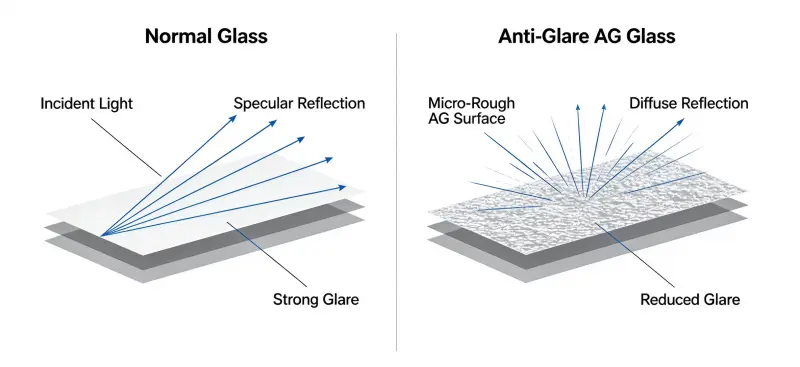
The basic principle of anti-glare glass is surface diffusion.
A conventional polished glass surface is relatively smooth. When light reaches it, a significant portion of the reflected light remains concentrated in a recognizable direction. Under the right lighting conditions, the viewer may see a window, lamp, or bright area reflected directly on the display.
An anti-glare surface introduces controlled microscopic texture to the glass. This texture spreads reflected light over a wider range of directions.
Instead of producing one strong and clearly defined reflection, the surface creates a more diffuse reflection.
This does not mean that the glass absorbs the surrounding light. The light is still reflected, but the reflection becomes less concentrated and therefore less visually distracting.
Why Does Reflection Affect Display Readability?
Display readability depends on more than the brightness produced by the display itself.
Consider a dark interface viewed under a bright ceiling light. If the glass surface produces a strong reflection, the reflected light can raise the apparent brightness of the dark areas of the screen.
This reduces the visual difference between bright and dark information.
In simple terms:
More distracting reflection → lower perceived contrast → more difficult viewing.
Anti-glare treatment can help reduce this effect by spreading the reflected light instead of allowing it to appear as a sharp image.
This is particularly useful when the display cannot control its surrounding lighting environment.
Anti-Glare Does Not Mean Anti-Reflection
The two terms are sometimes used interchangeably, but they describe different approaches.
Anti-glare (AG) primarily manages reflected light by scattering it across the surface.
Anti-reflective (AR) treatment is designed to reduce the amount of light reflected from the surface through optical interference.
This distinction becomes important when selecting glass for a particular display.
AG can be useful when the main problem is a visually distracting reflection or glare source. AR can be more appropriate when maintaining high optical transmission and minimizing surface reflection is a higher priority.
In some display designs, different optical treatments may be considered together rather than treating AG and AR as competing technologies.
What Is the Relationship Between AG Level and Image Quality?
More surface diffusion does not automatically mean a better display.
This is one of the most important considerations when selecting anti-glare glass.
A stronger anti-glare effect can reduce the visibility of direct reflections, but excessive surface scattering may also affect the perceived sharpness or clarity of the image.
For example, very fine text, detailed graphics, and high-resolution interfaces can be more sensitive to excessive surface diffusion than large, simple indicators.
Therefore, the objective is not necessarily to choose the strongest possible AG treatment.
The better approach is to match the surface characteristics to the actual viewing environment and display requirements.
Where Is Anti-Glare Glass Commonly Used?
Anti-glare glass can be considered for displays exposed to uncontrolled ambient lighting.
Typical examples include:
Industrial Displays
Control panels and operator interfaces may be installed in factories where overhead lighting and bright equipment can create unwanted reflections.
Outdoor Equipment
Outdoor displays face a much more complicated lighting environment because sunlight can reach the display from different directions throughout the day.
The glass surface therefore needs to be evaluated together with display brightness, viewing angle, and installation position.
Public Information Displays
Ticketing machines, information terminals, and other public-facing displays can be viewed under changing lighting conditions. Reducing distracting reflections can improve the viewing experience.
Automotive and Transportation Displays
Displays inside vehicles can experience reflections from windows, dashboard surfaces, and external light sources. Surface treatment is therefore one of several factors that may influence readability.
Touchscreen Equipment
Touch interfaces are particularly sensitive to surface reflections because users need to see both the displayed interface and their own interaction area clearly.
Does Anti-Glare Glass Improve Outdoor Readability?
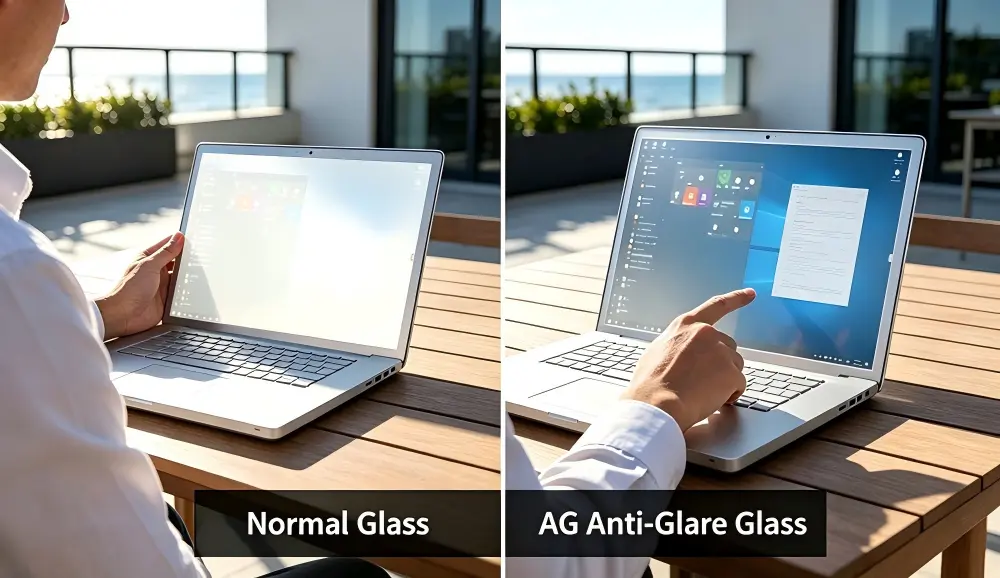
It can, but AG glass should not be considered a complete solution for outdoor readability.
Outdoor visibility depends on several factors:
Display luminance
Ambient light level
Sunlight direction
Surface reflection
Viewing angle
Glass transmission
Display contrast
Surface treatment
For example, a display with excellent AG performance may still be difficult to read in direct sunlight if its luminance is insufficient.
For this reason, outdoor display design usually requires the glass and display module to be considered together.
How Should You Choose an Anti-Glare Surface?
There is no single AG specification that works for every application.
A useful selection process starts with the actual operating environment.
Ask the following questions:
Where will the display be used?
Indoor industrial equipment and outdoor terminals may require very different optical characteristics.
What type of information is displayed?
Large numerical indicators may tolerate different surface characteristics than fine text or detailed graphics.
How bright is the display?
The glass should be evaluated together with the display’s luminance and contrast performance.
What type of lighting reaches the screen?
Diffuse indoor lighting, directional spot lighting, and direct sunlight can produce very different reflection problems.
Is touch performance important?
For touchscreens, surface feel, cleaning requirements, fingerprint visibility, and optical performance may all need to be considered together.
AG Glass vs. Plain Glass
Plain polished glass provides a smooth optical surface, but strong directional reflections can become highly visible under certain lighting conditions.
Anti-glare glass changes the surface behavior of reflected light.
The choice therefore depends on the intended application rather than one material being universally better than the other.
For displays installed in controlled indoor environments, plain glass may be sufficient.
For displays exposed to changing or difficult lighting conditions, an anti-glare surface may provide a practical advantage.
Can Anti-Glare Glass Be Combined With Other Surface Treatments?
Yes.
A display may require more than one surface characteristic.
For example, an application may need:
Anti-glare performance
Anti-fingerprint performance
Reduced reflection
Easy cleaning
High optical transmission
The final surface design depends on the display architecture and the required optical and mechanical performance.
The important point is that surface treatments should be selected according to the complete application rather than simply adding as many treatments as possible.
What Should Engineers Consider Before Ordering AG Glass?
Before selecting an anti-glare cover glass, it is useful to define the actual operating conditions.
Important parameters can include:
Display size
Glass thickness
Viewing distance
Ambient lighting
Outdoor or indoor installation
Display luminance
Required optical clarity
Touchscreen requirements
Surface hardness
Cleaning conditions
Required shape and dimensions
Testing the glass with the actual display module is particularly valuable because surface appearance can change depending on the interaction between the cover glass, display stack, and surrounding environment.
Conclusion
Anti-glare glass improves display readability by controlling how light is scattered at the glass surface.
Its purpose is not simply to make glass look less reflective. The more important question is whether the surface treatment produces the right balance between reflection control and image clarity for the intended application.
For industrial, outdoor, transportation, public-access, and touchscreen displays, the surrounding lighting environment should be considered before choosing the AG surface level.
A well-designed anti-glare solution is therefore not necessarily the strongest one. It is the one that provides an appropriate balance between reflection control, optical clarity, display contrast, and real-world viewing conditions.