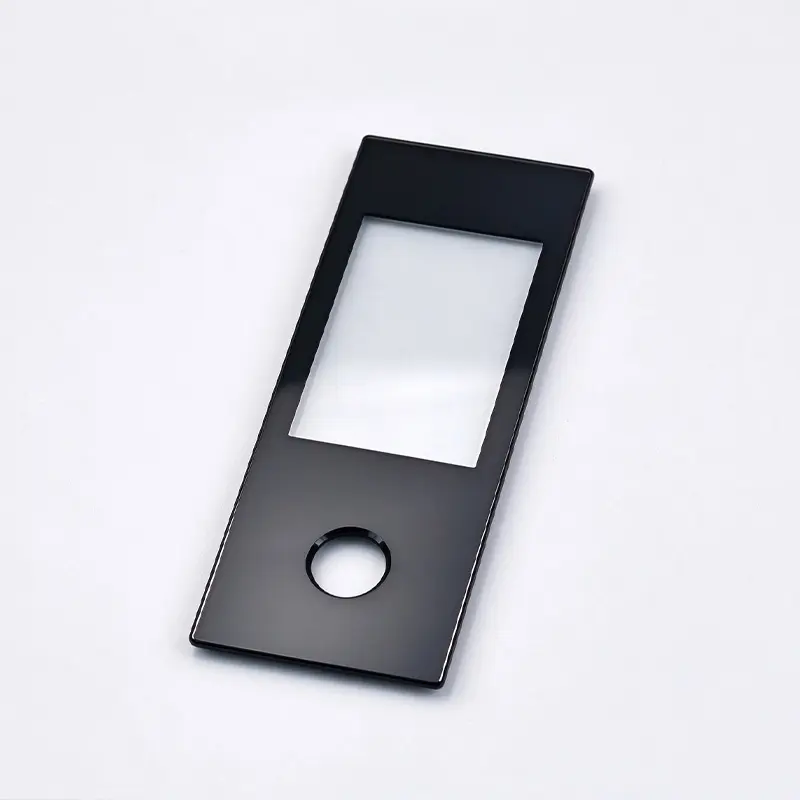
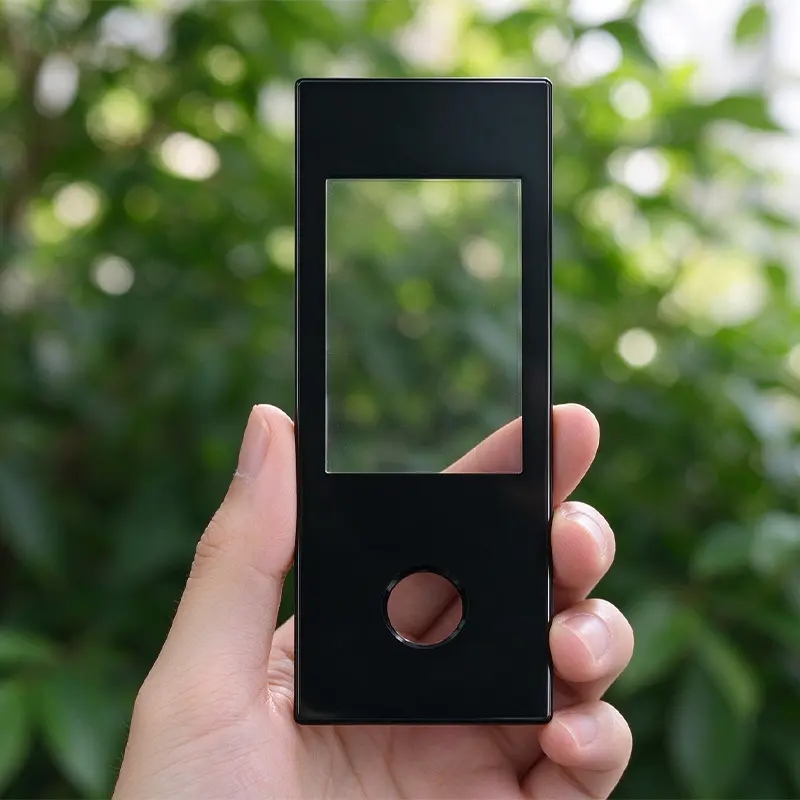
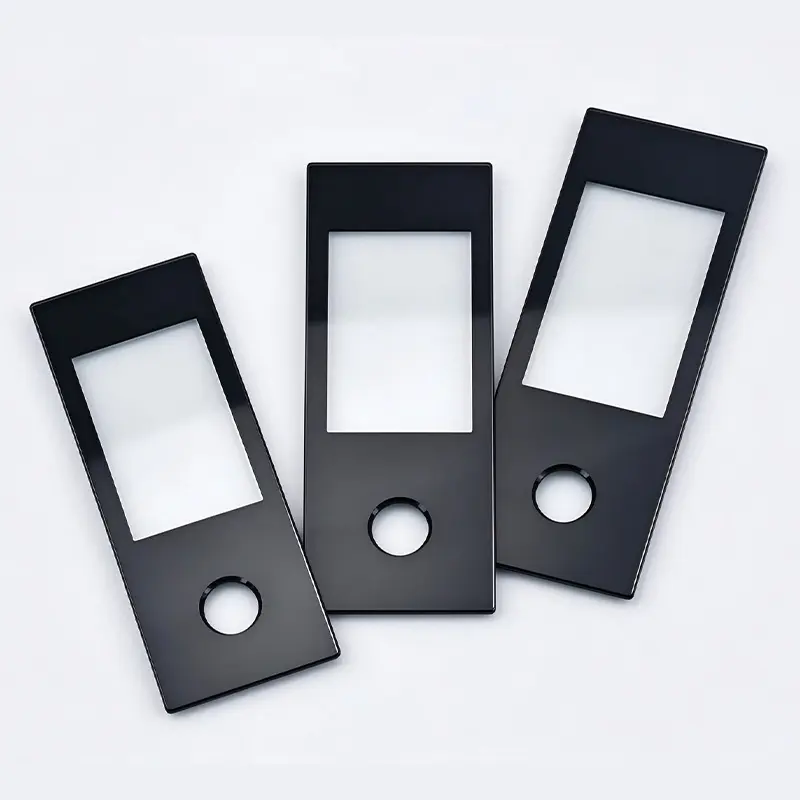

Custom Mounting Hole Configurations
Precision Hole Positioning
Hole coordinates should be defined from consistent drawing datums so that the glass panel aligns with the device housing and mounting points. The drawing should specify hole diameters, center-to-center distances and relevant dimensional tolerances.
Multiple Mounting Holes
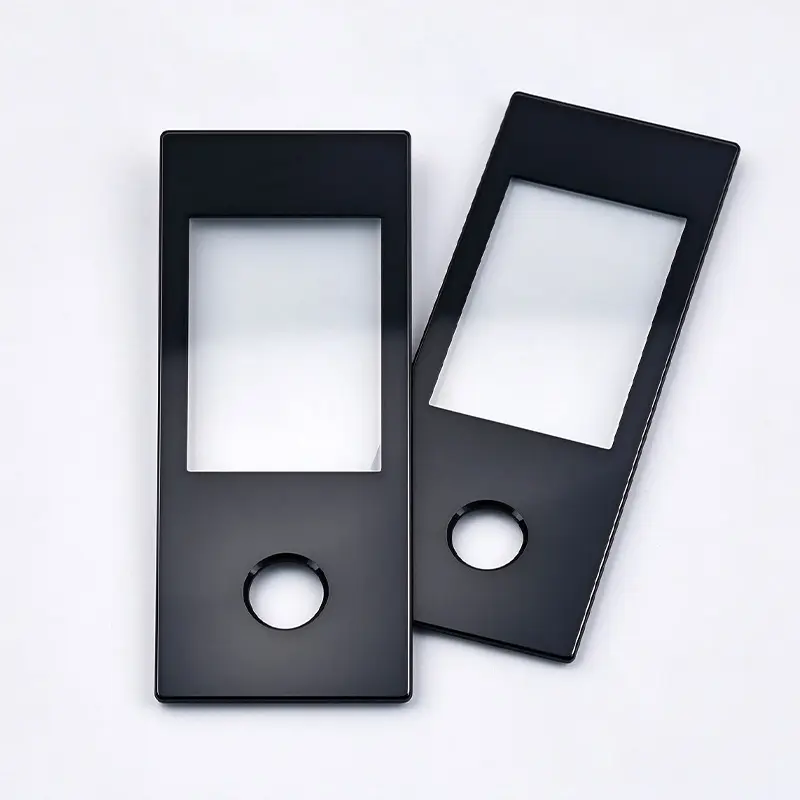
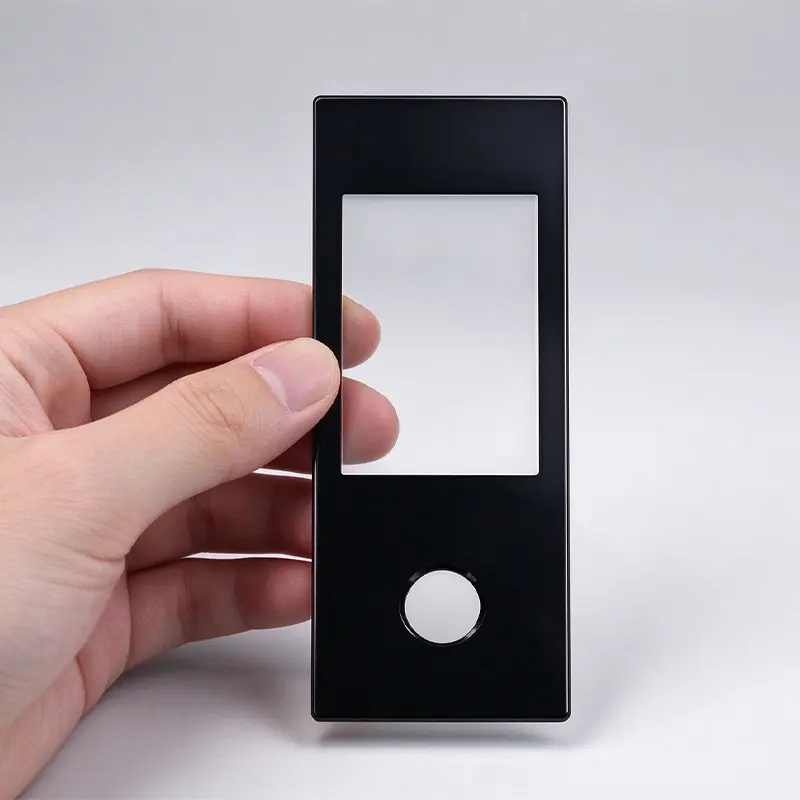
Glass panels may require two, four or more mounting holes depending on the equipment structure. Hole patterns can be customized according to the panel outline, support points and installation method.
Holes Near Panel Edges
The distance between a hole and the glass edge is an important design consideration. Adequate edge distance helps reduce the risk of damage during machining, handling and assembly. The suitable distance depends on glass thickness, hole diameter, material, edge quality and mechanical loading.
Holes with Custom Panel Shapes
Mounting holes can be incorporated into rectangular panels, rounded-corner panels and other drawing-based shapes, subject to the selected manufacturing process. The relationship between holes, corners, cutouts and finished edges should be checked during design review.
Applications of Glass Panels with Mounting Holes
Electronic Display Panels
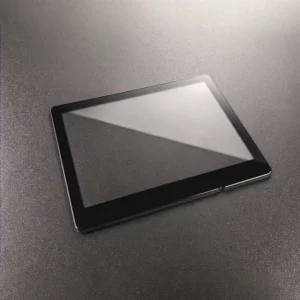
Glass panels for electronic displays may use mounting holes to align the front glass with a frame or enclosure. Optical requirements, panel dimensions and the position of the active display area should be considered together.
Industrial Control Equipment
Industrial equipment may require glass windows or front panels that attach directly to a housing. Hole patterns and edge finishing should match the installation design and expected service conditions.
Instrument and Measurement Equipment
Instrument panels can require accurately positioned glass windows to protect viewing areas while maintaining alignment with internal components and the external enclosure.
Commercial Electronic Devices
Custom mounting-hole glass may be used in electronic terminals, equipment interfaces and other devices where the front panel must fit a defined mechanical structure.
Glass Materials and Processing Options
Glass materials: Soda-lime or aluminosilicate glass, depending on project requirements.
Custom thickness: Selected according to panel size, mounting method and structural design.
CNC machining: Hole drilling, cutouts and customized external profiles, subject to the drawing and material.
Edge processing: Grinding, polishing or other specified edge finishes.
Glass strengthening: Chemical strengthening or thermal tempering may be considered depending on material, thickness, geometry and performance requirements.
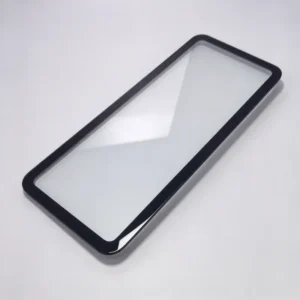
Screen printing: Optional borders, logos and graphics for finished front panels.
Surface treatments: Anti-fingerprint, anti-glare or anti-reflective options where appropriate.
Adhesive integration: Compatible tapes or bonding methods may be evaluated if the glass is installed as part of a bonded assembly.
The feasible process sequence should be confirmed before finalizing the design, particularly where drilled holes, narrow edge distances or strengthening requirements are involved.
Technical Specifications for Glass Panels with Mounting Holes
| Specification | Information to Define |
| Glass material | Required material or performance criteria |
| Glass thickness | Nominal thickness and tolerance |
| Panel dimensions | Length, width and overall profile |
| Hole diameter | Diameter of each mounting hole |
| Hole positions | Coordinates, pitch and reference datums |
| Edge distance | Distance from hole centers to finished edges |
| Dimensional tolerances | Requirements for panel size and hole locations |
| Edge finish | Ground, polished or otherwise specified |
| Surface treatment | Clear, matte or other required finish |
| Printing | Optional borders, logos or functional markings |
| Strengthening | Required process and acceptance criteria |
| Quantity | Prototype, sample or production order volume |
Not every project requires the same hole tolerance. Specify the functional fit needed for the mounting hardware rather than requesting the tightest possible tolerance by default.
Design Considerations Before Production
Confirm Hole Geometry
Provide the hole diameter, location and any countersink or special profile requirements. Standard cylindrical holes and specially shaped openings may require different machining approaches.
Review Edge Distance and Glass Thickness
Hole placement should be assessed against the glass thickness, panel dimensions and mechanical loading. Holes located too close to an edge or corner may increase the risk of cracking.
Define the Mounting Method
Clarify whether the glass is fixed with screws, brackets, clips, spacers or another mounting structure. The mounting method determines the clearance, support and contact conditions that must be considered.
Check the Processing Sequence
Drilling, edge finishing, printing and strengthening need to be planned as a compatible manufacturing sequence. The correct order depends on the material, process and final specification.
Verify Assembly Fit
For new designs, a sample evaluation can help confirm hole alignment, dimensional fit, edge condition and compatibility with the intended hardware before production quantities are approved.
Frequently Asked Questions
Can glass panels be manufactured with custom mounting hole patterns?
Yes. Hole count, diameter and location can be specified according to the engineering drawing, subject to the glass material and manufacturing capabilities.
Can mounting holes be positioned close to the glass edge?
The feasible distance depends on hole diameter, glass thickness, material, edge quality and loading conditions. The design should be reviewed before production to reduce the risk of damage.
Are CNC-drilled holes suitable for electronic glass panels?
CNC machining can be used for specified holes and cutouts where appropriate. The machining method and achievable tolerances should be confirmed for the selected glass and panel geometry.
Can glass panels with mounting holes also have printed borders?
Yes. Screen-printed borders, logos and functional graphics can be incorporated where the design and process sequence permit. The artwork should be coordinated with the hole positions and visible areas.
Can the glass be strengthened after hole machining?
Some glass materials and designs can be strengthened after machining. Suitability depends on the substrate, thickness, hole geometry and required performance, so the complete process should be confirmed in advance.
What information is required for a quotation?
Provide a dimensioned drawing or CAD file, glass material, thickness, hole diameters and positions, edge requirements, surface treatment, quantity and intended application. Include mounting hardware details if available.
Request a Custom Glass Panel Quote
Send your engineering drawing and mounting specifications for review. Include the panel dimensions, glass thickness, hole pattern, edge requirements and estimated quantity so that a suitable glass and machining configuration can be evaluated for your project.