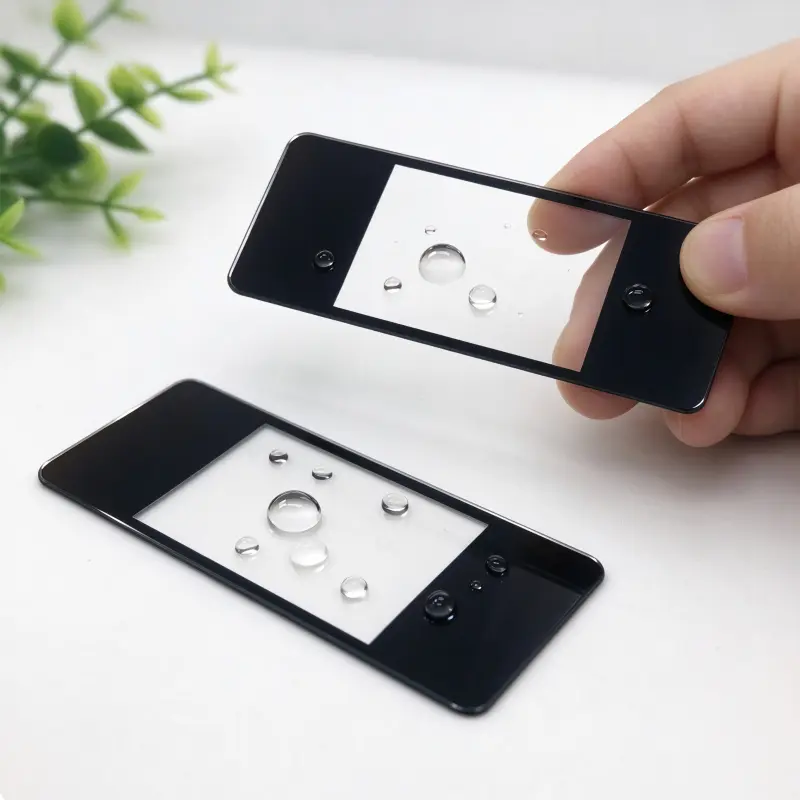
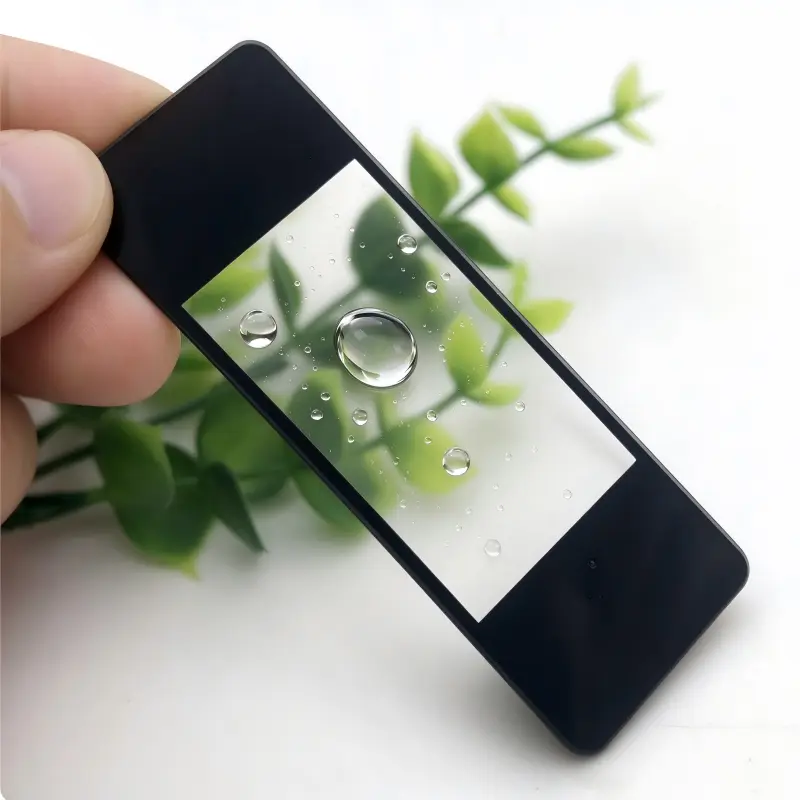
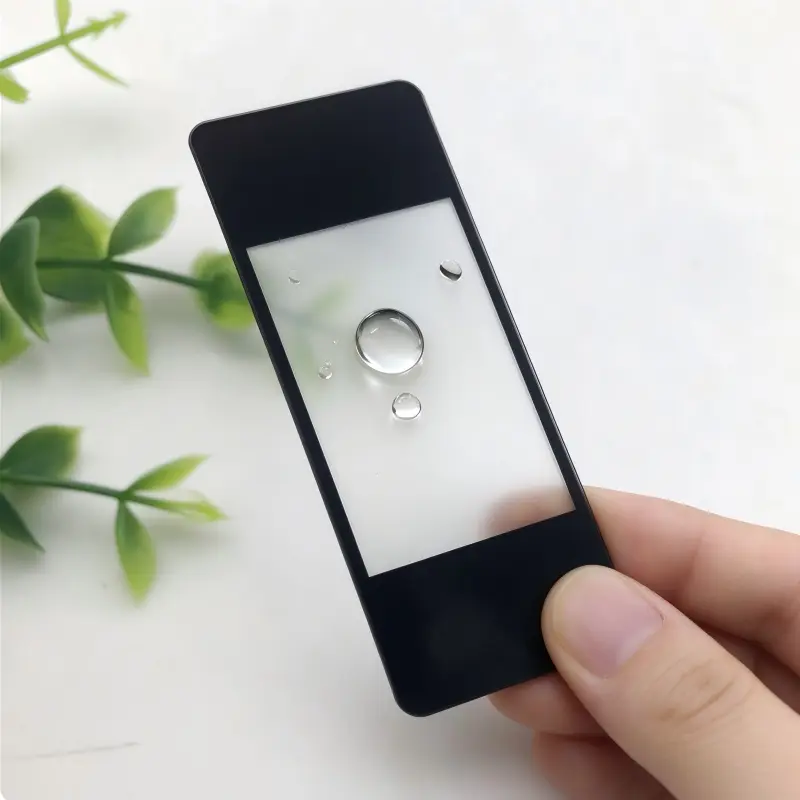
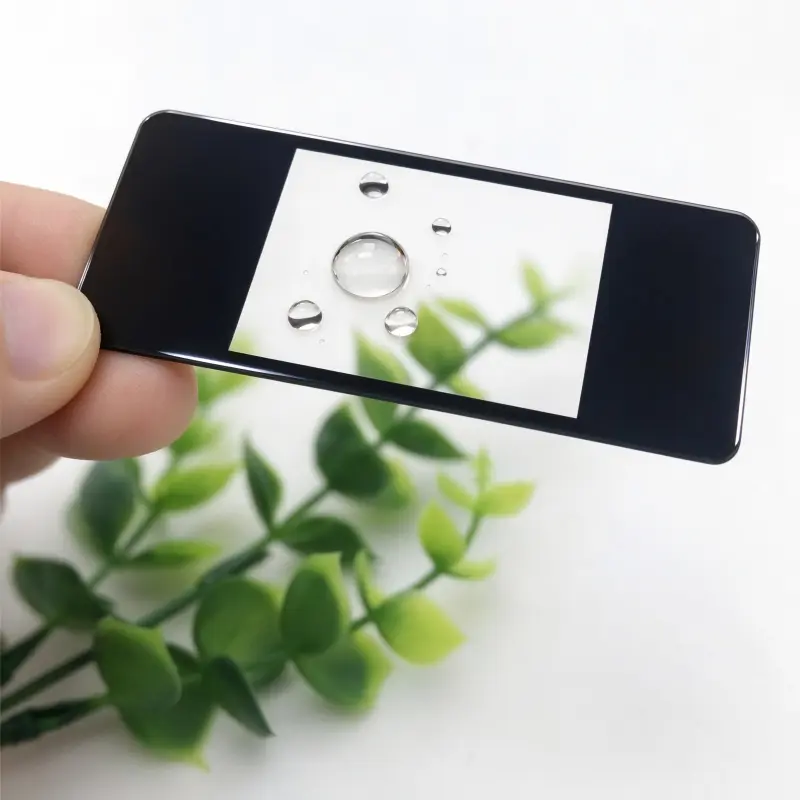

Custom Printed Cover Glass with AF Coating
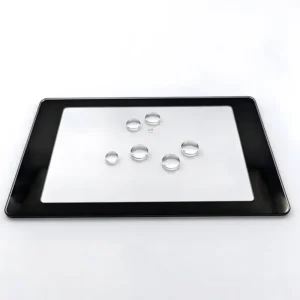
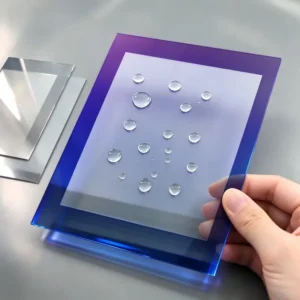
Printed cover glass combines a finished glass substrate with screen-printed borders, logos, symbols or other design elements. An optional anti-fingerprint (AF) treatment can be specified when the finished surface requires improved resistance to fingerprints and easier routine cleaning.
For electronic equipment manufacturers, the objective is not simply to print a design on glass. The glass must also match the mechanical drawing, align with the display or control interface and meet the agreed appearance and surface requirements.
ZL Cover Glass offers a custom-manufacturing approach for OEM projects that require defined dimensions, printed graphics and functional surface treatment.
Custom Printing Options for Cover Glass
Black Borders and Opaque Areas
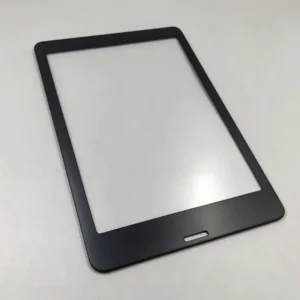
Black borders are commonly specified to conceal selected internal components, define the viewing window or create a consistent appearance around the display.
The drawing should identify the visible window, border width, opaque areas and any regions that must remain free of printing.
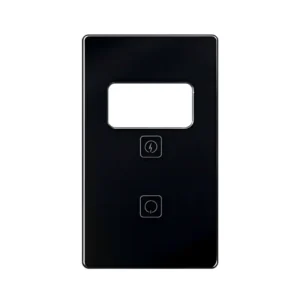
Logos, Icons and Control Graphics
Glass panels may include brand logos, symbols, labels or control-interface graphics. Artwork should be supplied in an agreed digital format with clear dimensions, color references and positioning requirements.
For projects with multiple product versions, revision control is important. Changes to artwork should be approved before the production run.
Custom Colors and Printed Patterns
Depending on the selected printing process, custom colors and graphic patterns can be evaluated. Color matching requirements should identify the reference standard and the acceptable visual variation.
Printed appearance can be influenced by glass color, coating, ink system and viewing conditions. A physical sample is useful when appearance is critical.
AF Coating for Printed Glass Panels
AF coating can be added when the exposed glass surface requires improved fingerprint resistance and cleanability.
The coating and printing sequence must be determined according to the selected materials and process. For example, the location of the AF-treated surface, the printing surface and any bonding interface should be clearly identified in the technical specification.
Before production, confirm:
- Which surface receives the AF treatment
- Whether the coating must remain outside the printed region
- Whether printing adhesion is affected by the selected process
- How optical appearance and coating performance will be inspected
- Whether cleaning or abrasion testing is required
Do not assume that all coating systems are compatible with every ink or printing process.
Product Specifications
| Parameter | Options |
| Glass material | Soda-lime, aluminosilicate or other project-suitable glass |
| Thickness | Customized according to design |
| Shape | Rectangular or custom CNC-cut outline |
| Printing | Black border, logo, symbols or custom graphics |
| Printing colors | According to the approved artwork and process |
| Surface treatment | Optional AF, AR or AG, subject to compatibility |
| Edge finishing | Ground, polished or chamfered |
| CNC features | Holes, slots, notches and cutouts |
| Strengthening | Chemical strengthening or thermal tempering, where applicable |
| Inspection | Dimensions, printed appearance, surface defects and agreed performance tests |
The final configuration depends on the approved drawing, substrate, printing process and coating requirements.
OEM Custom Glass Processing and Manufacturing

ZL Cover Glass supports custom glass panel projects for OEM customers who need more than a standard cut-to-size component. Glass dimensions, printed graphics, mounting features, edge finishing and surface treatments can be specified according to the product design and approved engineering drawing.
The objective is to develop a glass component that fits the intended assembly and meets the agreed appearance, dimensional and surface-performance requirements.
Customization and Processing Options
-
Glass Cutting and Custom Shapes
Glass can be specified in standard rectangular formats or drawing-defined outlines. Dimensions, corner radii and shape requirements should be confirmed during the initial design review.
-
CNC Holes, Slots and Cutouts
Mechanical features can be incorporated for mounting, alignment or assembly. Provide hole diameters, coordinates, tolerances and minimum edge distances on the engineering drawing.
-
Edge Grinding, Polishing and Chamfering
Different edge finishes can be specified according to the component design. Critical edge details should be documented to support consistent manufacturing and inspection.
-
Screen Printing and Graphic Customization
Printed borders, logos, symbols and designated opaque areas can be developed from approved artwork. Print orientation, viewing-window dimensions, color references and graphic positioning should be confirmed before production.
-
Glass Strengthening
Chemical strengthening or thermal tempering may be considered according to the selected glass material, thickness and geometry. The suitable process must be confirmed for the specific part.
-
AF, AR and AG Surface Treatments
AF treatment can be specified to improve fingerprint resistance and cleanability. AR and AG options can also be evaluated where reflection or glare control is required. The selected coating system must be compatible with the glass substrate, printing process and intended assembly.
Coordinated Manufacturing for Drawing-Based Orders
A custom printed glass project may involve several interdependent requirements. For example, the printed border must align with the display window, mounting holes must match the housing, and the selected surface treatment must suit the exposed glass surface.
ZL reviews these requirements as part of the OEM specification process. Before manufacturing, the customer should confirm the drawing revision, artwork, glass thickness, machining details, coating surface and inspection criteria.
Quality Inspection and Sample Confirmation
Inspection requirements can be defined for the finished component, including:
- Overall dimensions and specified tolerances
- Hole positions and edge geometry
- Printing alignment, color and visible defects
- Glass surface appearance
- Coating performance according to agreed test methods
- Packaging requirements for finished glass components
The inspection plan should reflect the actual product specification. Any critical dimensions or appearance criteria should be identified before production.
What to Include in Your OEM RFQ
To help establish the appropriate processing route, provide:
- A 2D engineering drawing and, if available, a 3D reference
- Glass material and thickness
- Artwork and printing requirements
- Hole positions, edge details and dimensional tolerances
- Strengthening and surface-treatment requirements
- Required inspection standards
- Prototype quantity and estimated production volume
ZL can review the drawing and confirm which processing options are applicable to the project before quotation and production.
Request an OEM quotation from ZL Cover Glass for custom printed glass panels with precision machining and optional AF surface treatment.
Engineering Details That Prevent Production Problems
1. Define the Viewing Window
Specify the active display area and the visible glass area separately. Include the position of printed borders and any areas that must remain transparent.
2. Dimension Holes and Cutouts
Mounting holes and cutouts should include their dimensions, locations, edge distances and tolerances. These features can affect both manufacturing yield and installation fit.
3. Confirm Printing Orientation
Identify the viewing side and printing side on the drawing. If the design requires reverse printing or printing on the rear surface, make that requirement explicit.
4. Coordinate Printing and AF Treatment
The order of printing and coating can influence appearance, adhesion and durability. Confirm the intended process with the manufacturer rather than assuming one universal production sequence.
5. Set Appearance Acceptance Criteria
Define acceptable limits for color variation, alignment, pinholes, visible contamination, scratches and other relevant defects. Inspection should be based on agreed lighting, viewing distance and acceptance criteria.
Typical Applications

Custom printed cover glass can be considered for:
- Industrial display panels
- Electronic control interfaces
- Home appliance display panels
- Smart-home control devices
- Self-service equipment
- Commercial electronic products
- Custom OEM assemblies requiring printed graphics
The appropriate glass material, coating and strengthening process should be selected according to the product design and service conditions.
Custom Manufacturing Process
A typical project follows these stages:
- Drawing and artwork review
- Glass material and thickness confirmation
- Glass cutting and CNC machining
- Edge finishing and strengthening, where applicable
- Screen printing and surface treatment according to the agreed process
- Dimensional, visual and specified performance inspection
- Protective packaging for shipment
The exact process sequence may vary according to the substrate and finishing requirements.
Request a Quote for Printed Cover Glass
To start a project, send the following information:
- Engineering drawing with dimensions and tolerances
- Glass thickness and material preference
- Artwork, logo and color references
- Printed-border and viewing-window dimensions
- Hole and cutout details
- AF coating requirements
- Estimated quantity and prototype requirements
- Special appearance or reliability criteria
If your design is still under development, a preliminary drawing and reference image can help establish the initial manufacturing scope.
Contact ZL Cover Glass to discuss printed glass panels with custom graphics, mechanical processing and optional AF coating.
Frequently Asked Questions
Can AF coating be combined with screen-printed glass?
It can be considered when the coating and printing materials and process sequence are compatible. The intended coating surface should be specified in the drawing or process requirements.
Can the glass include a black border and logo?
Yes. Black borders, logos and other graphics can be evaluated based on the approved artwork and printing process.
Can holes and cutouts be manufactured in printed glass?
Custom CNC features can be specified, subject to glass material, thickness, geometry and manufacturing limits.
What artwork file should I provide?
Provide a clear vector artwork file where possible, together with dimensions, color references, print orientation and a drawing showing the intended graphic location.
Is AF coating required for all printed glass?
No. AF is an optional treatment for projects that need improved fingerprint resistance and cleanability. The need depends on the exposed surface and the end-use environment.
How can I reduce printing defects?
Confirm artwork revisions, color references, print orientation, viewing-window dimensions and appearance acceptance criteria before production. Sample approval is advisable for visually critical products.
Custom dimensions, edge finishing, mounting holes and cutouts can be evaluated according to the drawing and manufacturing capabilities.
How do I compare AR + AF glass suppliers?
Compare the same substrate, coating sides, wavelength range, measurement method, reflectance, transmittance and durability requirements. This provides a more meaningful comparison than comparing headline percentages alone.