
Glass Touchpad Design for Modern Electronic Devices
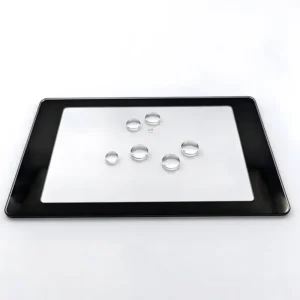
Glass has become an important surface material in premium laptop and electronic touchpad designs. Compared with conventional plastic overlays, a glass touchpad surface offers a different tactile character, surface appearance and manufacturing approach.
For OEM designers, selecting touchpad glass involves more than choosing a transparent material. The surface must work with the underlying capacitive sensing system, mechanical support and housing structure.
Typical design considerations include:
- Overall glass dimensions and active touch area
- Glass thickness and flatness
- Surface gloss or matte finish
- Edge shape and corner radius
- AF coating location and coverage
- Sensor compatibility and touch response
- Assembly clearance and mounting method
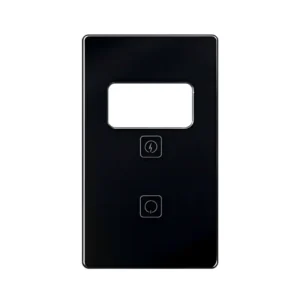
A touchpad glass component may be designed as a standalone cover or as part of a larger touchpad assembly. The final construction depends on the product architecture and the touch module supplier’s specifications.
Anti-Fingerprint Coating for Touchpad Glass
A laptop touchpad receives repeated finger contact throughout the working day. Skin oils and fingerprints can gradually build up on the surface, particularly in the central operating area.
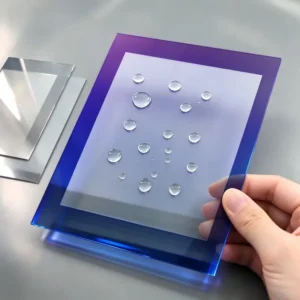
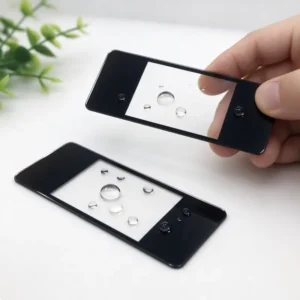
AF coating is an oleophobic surface treatment intended to reduce the adhesion of oily contaminants. It can make fingerprints less noticeable under normal use and simplify routine surface cleaning.
For glass touchpad applications, coating selection should consider more than water repellency or initial contact angle.
Important evaluation points include:
- Oil and fingerprint resistance
- Ease of cleaning after repeated use
- Surface uniformity across the touch area
- Coating adhesion and durability
- Friction characteristics during finger movement
- Compatibility with the selected glass substrate
A very slippery surface is not automatically the best choice for every touchpad. The user experience depends on the balance between finger movement, gesture accuracy and the surface characteristics specified by the device manufacturer.
For this reason, ZL recommends evaluating the actual touchpad glass sample with the intended touchpad module before approving the final coating specification.
Surface Feel and Touchpad Performance
The tactile experience of a touchpad is influenced by the glass finish, coating system and underlying sensing technology.
Some laptop designs use glossy glass surfaces, while others prefer a matte appearance to create a different finger-contact experience. AF treatment can be considered for either design, subject to coating compatibility and the required surface finish.
When developing custom glass touchpads, buyers should distinguish between three separate requirements:
-
Fingerprint resistance
AF treatment helps reduce oily contamination and makes routine cleaning easier.
-
Finger movement
Surface friction affects how fingers move across the touchpad. The preferred friction level should be evaluated through practical user testing rather than assumed from a coating name.
-
Capacitive sensing
The glass thickness, dielectric properties and distance between the finger and sensor electrodes can influence touch detection. The touchpad module and controller should therefore be evaluated with the selected glass construction.
AF coating alone does not guarantee improved touch sensitivity. The complete glass and sensor assembly must be tested together.
Custom Glass Processing for Laptop Touchpads
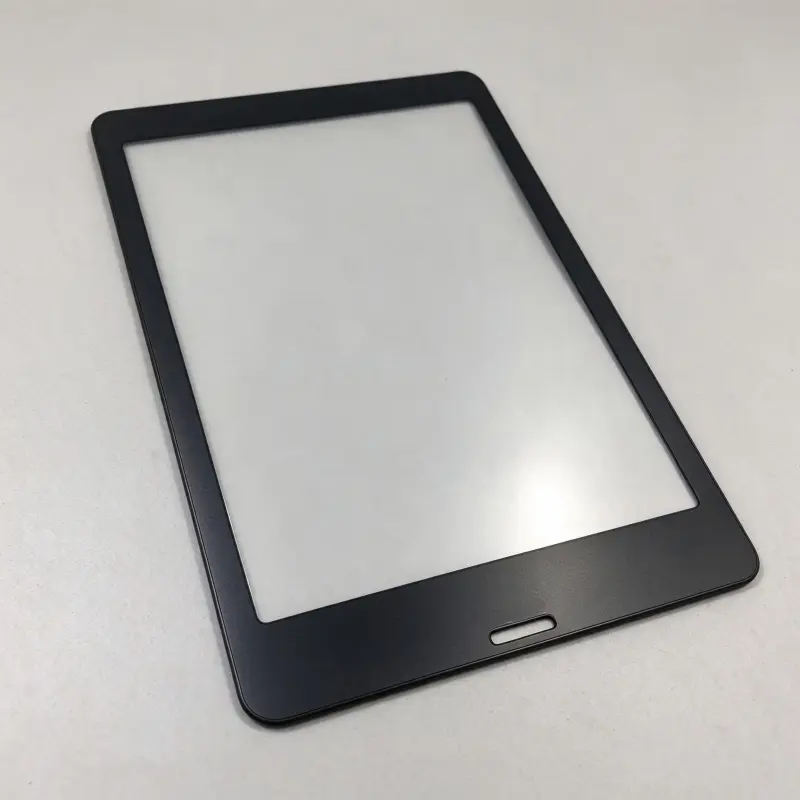
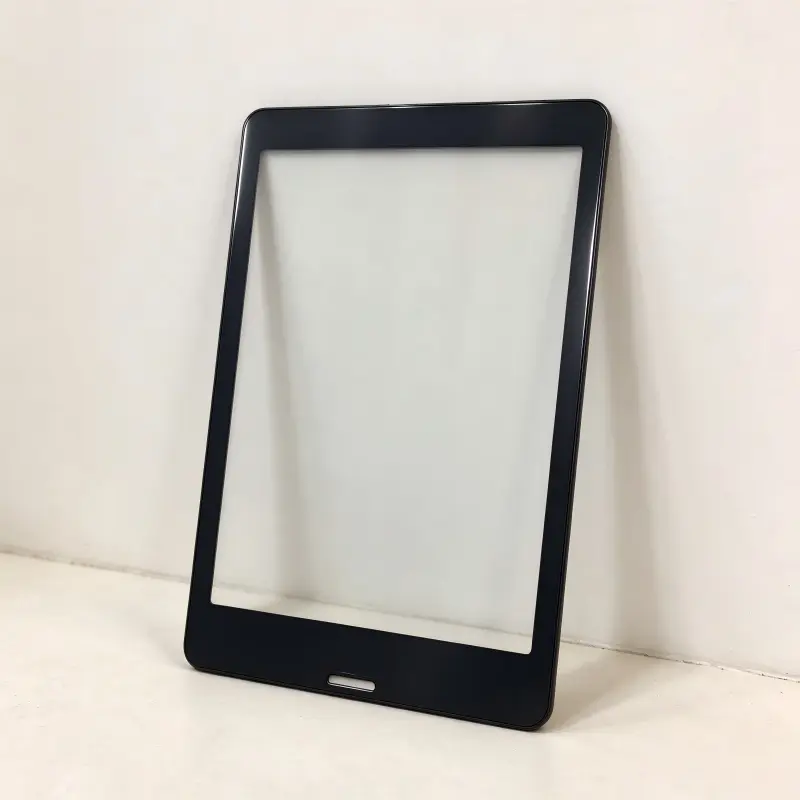
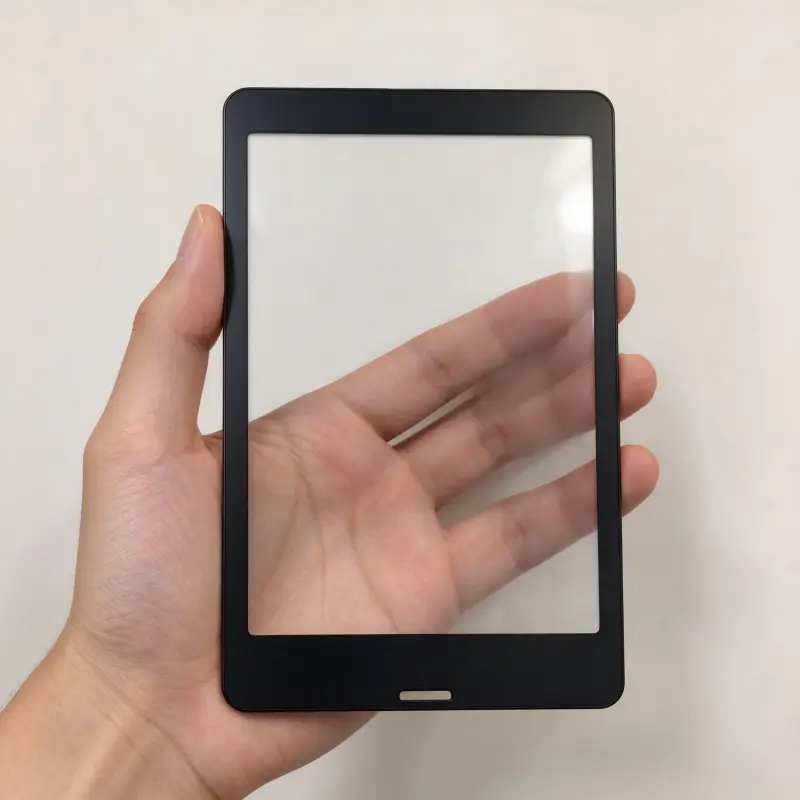
Touchpad glass is usually a precision-shaped component rather than a standard rectangular glass sheet. Its dimensions, corners and edges must match the mechanical design of the laptop or electronic device.
ZL supports OEM glass customization according to approved drawings and technical specifications. Depending on the selected substrate and manufacturing route, processing options may include:
- Custom glass cutting and CNC shaping
- Precision thickness selection
- Rounded corners and custom edge profiles
- Edge grinding and polishing
- Chemical strengthening, where suitable
- Silk-screen printing for designated areas
- AF coating on specified surfaces
- Protective packaging for component transportation
For touchpad projects, the perimeter geometry deserves particular attention. Small differences in corner radius, edge height or overall dimensions can affect the fit between the glass, supporting frame and housing.
Customers should provide a 2D drawing or sample whenever possible. If the touchpad uses a specific bonding method or mounting structure, these details should also be included in the initial design review.

OEM Specifications for AF Touchpad Glass
| Specification | Customization Options |
| Glass Material | Soda-lime glass / Aluminosilicate glass, subject to project evaluation |
| Glass Thickness | Customized according to design |
| Dimensions | Custom length and width |
| Shape | Rectangular or drawing-based geometry |
| Corner Design | Custom radius |
| Edge Processing | Grinding / Polishing / Chamfering |
| Surface Treatment | AF coating |
| Surface Appearance | Glossy or matte, subject to process compatibility |
| Printing | Custom silk-screen printing, where required |
| Strengthening | Chemical strengthening or thermal tempering, subject to material and thickness |
| Application | Laptop touchpads and electronic touchpad modules |
Final specifications should be confirmed against the touchpad assembly drawing and approved sample.
What Buyers Should Check Before Ordering Touchpad Glass
A touchpad glass project can encounter problems when the glass supplier and touch module manufacturer work from different dimensional references.
Before placing an OEM order, buyers should confirm:
- Active area and outer dimensions: The overall glass size is not necessarily the same as the active sensing area. Both should be clearly identified on the drawing.
- Glass thickness: The selected thickness must match the mechanical stack-up and capacitive sensing design.
- Surface finish: Glossy and matte finishes can produce different tactile experiences. Sample approval is recommended.
- AF coating requirements: Specify the required fingerprint resistance, cleaning performance and coating durability instead of relying on a generic AF description.
- Edge and corner geometry: Confirm the edge profile, corner radius and dimensional tolerances.
- Assembly method: Identify whether the glass is bonded, mounted or integrated into a complete touchpad module.
Custom AF Glass for Touchpad Manufacturers
ZL Cover Glass works with OEM customers developing glass components for laptops and other electronic touchpad products.
Whether you are developing a new glass touchpad, replacing an existing surface material or reviewing an alternative AF coating specification, the project can be evaluated according to your drawings and sample requirements.
To request a quotation, please provide:
- 2D drawing or existing touchpad glass sample
- Glass dimensions and thickness
- Glass material preference
- Required surface finish
- AF coating requirements
- Edge processing and corner details
- Printing or other functional features
- Prototype quantity and estimated production volume
Our team can review the proposed glass structure and processing requirements before confirming the manufacturing approach.
Frequently Asked Questions
1. What is AF glass for touchpads?
AF glass for touchpads is a glass component treated with an anti-fingerprint coating. The treatment is designed to reduce the adhesion of fingerprints and oily contamination on frequently touched surfaces.
2. Can anti-fingerprint coating be applied to laptop touchpad glass?
Yes. AF treatment can be considered for laptop touchpad glass. The coating should be evaluated for fingerprint resistance, surface friction, durability and compatibility with the touchpad assembly.
3. Does AF coating affect touchpad sensitivity?
AF coating is a surface treatment, but the complete glass construction can influence capacitive sensing. Glass thickness, dielectric properties and sensor design should be evaluated together to verify touch response.
4. Can touchpad glass be manufactured with a matte surface?
Matte glass touchpad designs can be evaluated according to the required appearance and tactile characteristics. The surface finish and AF coating compatibility should be confirmed through sample testing.
5. What thickness is suitable for touchpad glass?
There is no single suitable thickness for every touchpad. The correct specification depends on the touch sensor, mechanical structure, glass dimensions and assembly method.
6. Can ZL manufacture custom-shaped touchpad glass?
Yes. Custom dimensions, corner radii and edge profiles can be evaluated according to customer drawings and manufacturing requirements.
7. Can samples be supplied before mass production?
Prototype samples can be discussed for dimensional, surface and assembly evaluation before proceeding to mass production. Sample quantity and feasibility depend on the project specification.