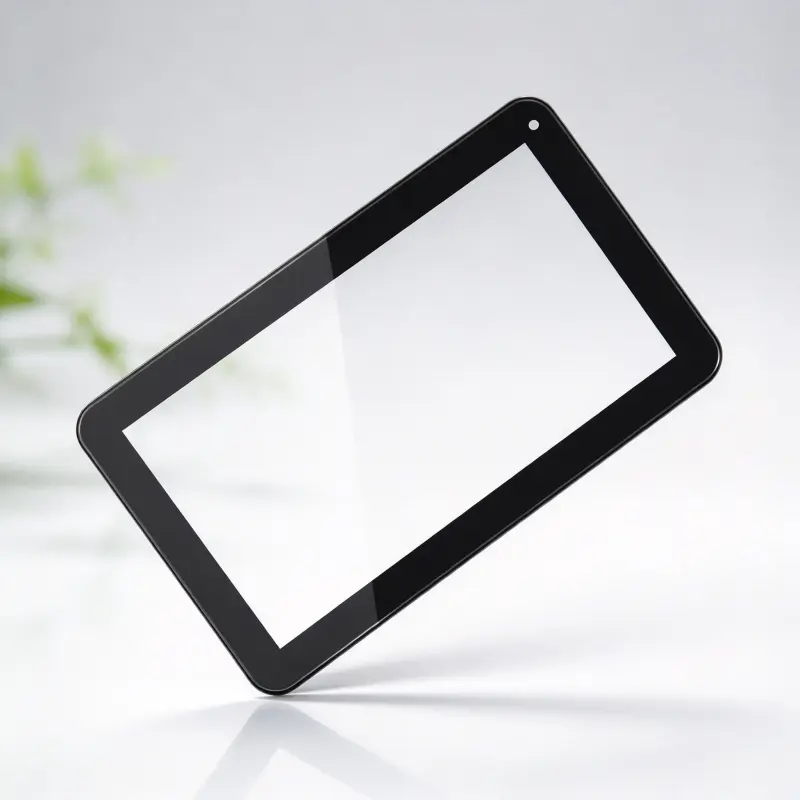
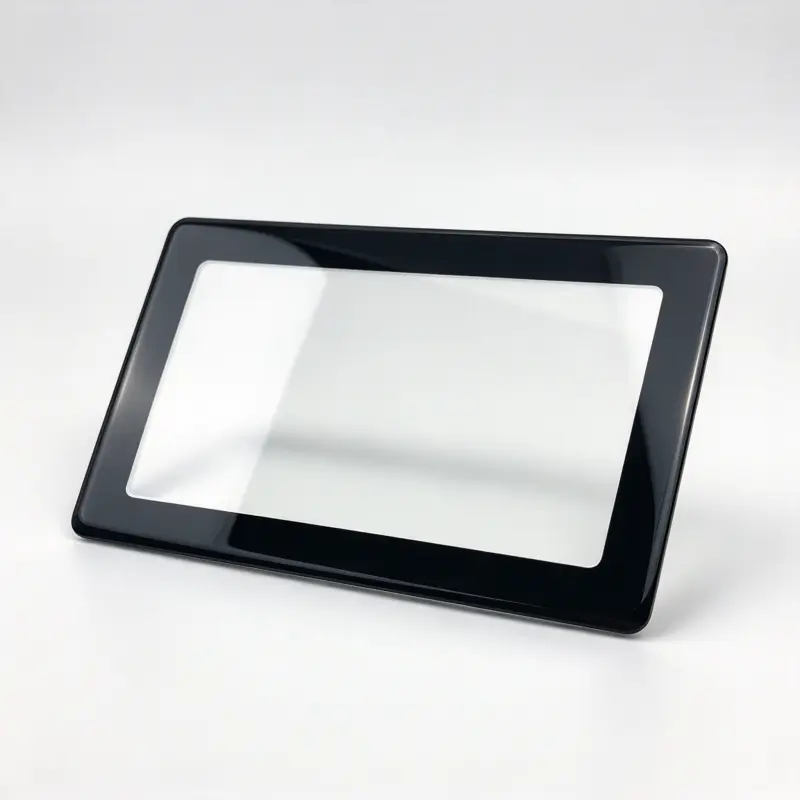
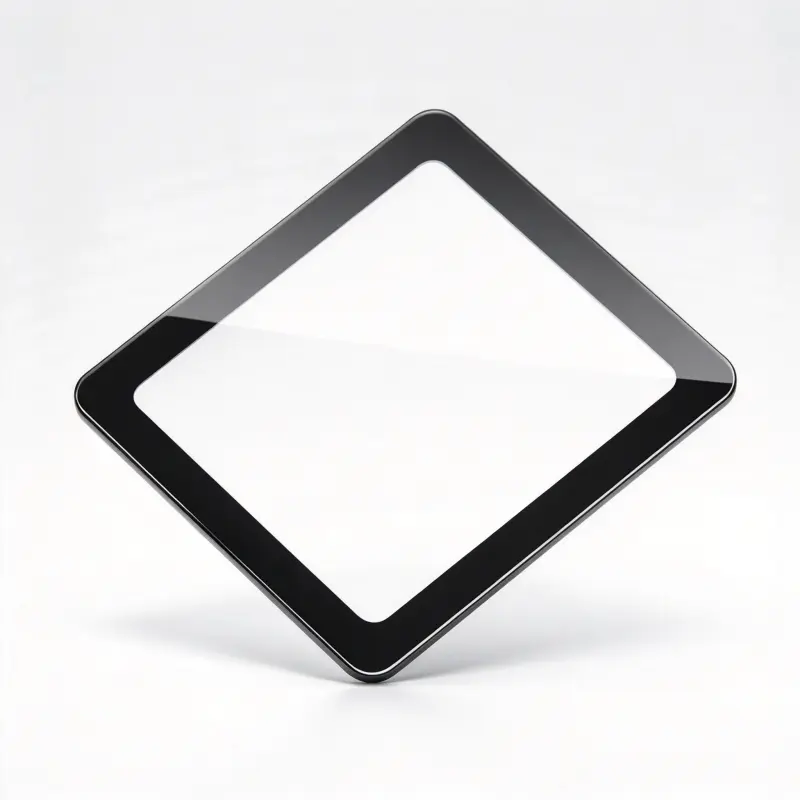
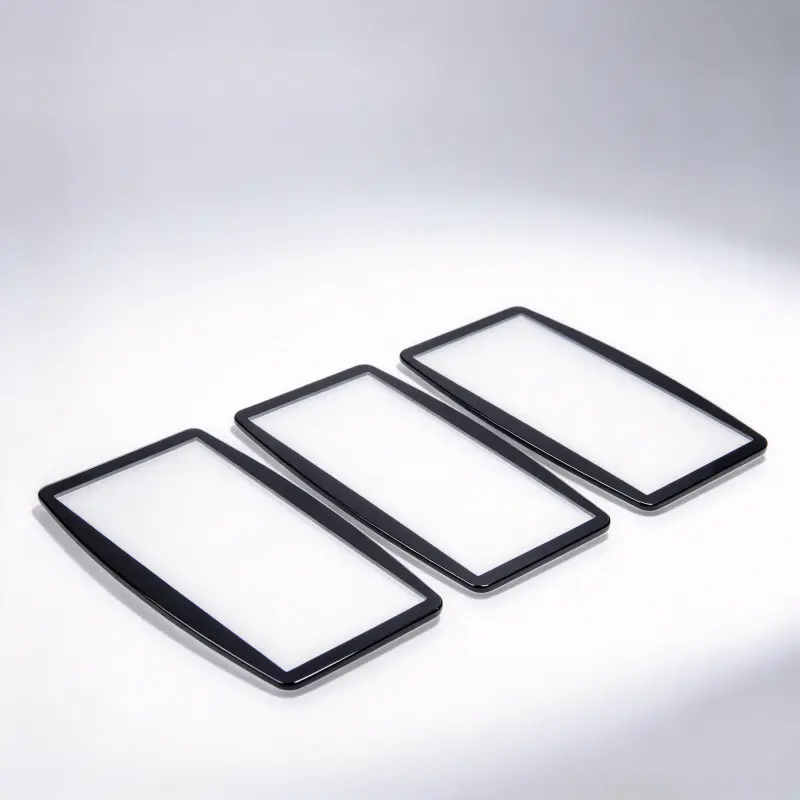

Tablet Cover Glass for Touchscreen Devices
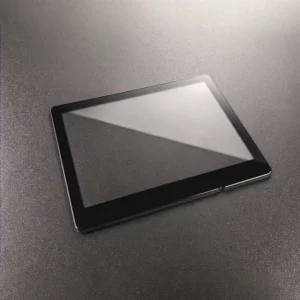
Tablet computers need a front glass that does more than cover the display.
The glass sits directly between the user and the touchscreen, so its thickness, optical quality, edge geometry and surface condition can all affect the finished product. A tablet used in an office may have very different requirements from one installed in a warehouse, restaurant, classroom, vehicle or retail environment.
Tablet cover glass is manufactured for these applications, with the glass specification developed around the display size, touch sensor, housing and intended use of the device.
For OEM tablet manufacturers, the glass can be supplied to custom dimensions and processed according to the finished product drawing.
Tablet Cover Glass for Different Device Designs
Tablet displays are available in many sizes and configurations.
A compact tablet may require a relatively thin front glass to keep the overall device light and comfortable to hold. A larger commercial tablet or industrial terminal may need a more rigid glass construction because the front panel has a larger unsupported area.
The glass therefore should not be selected by thickness alone.
The finished design can take into account:
- Display size
- Glass thickness
- Touch sensor structure
- Device housing
- Viewing area
- Edge profile
- Mounting method
- Expected handling
- Surface environment
This allows the glass to be matched to the actual tablet rather than using one specification for every project.
Tablet Screen Cover Glass for OEM Products
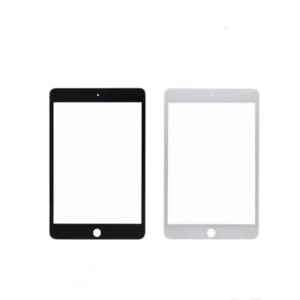
OEM tablet manufacturers often require glass that fits a specific housing rather than an off-the-shelf screen protector.
The glass can be produced from engineering drawings, CAD files or physical samples.
Custom processing may include:
- Precision cutting
- CNC edge processing
- Corner radius
- Drilled holes
- Slots and openings
- Polished edges
- Black border printing
- Logo printing
- Functional icons
- Adhesive areas
- Surface treatments
The exact processing depends on the tablet structure and assembly method.
For example, a tablet may require a printed black border around the display to hide the LCD edge and adhesive layer. Another design may require openings for a camera, sensor or speaker.
These features can be incorporated into the glass specification before production.
Chemically Strengthened Tablet Glass
Tablet devices are frequently handled, placed on tables and transported between locations.
For this reason, mechanical strength is an important consideration.
Chemically strengthened glass can be evaluated when the design requires a thinner glass substrate together with improved resistance to everyday mechanical stress.
The strengthening process modifies the surface of the glass and can provide a useful combination of thinness and strength.
The correct glass type and strengthening specification depend on the tablet design, thickness and expected operating conditions.
For demanding products, the glass should be evaluated together with the housing and assembly structure rather than considered independently.
Optical Performance
The front glass is part of the display system, so optical quality is important.
A tablet user may spend several hours looking at text, images, video or software interfaces through the glass.
The finished component may therefore be evaluated for:
- Visible light transmission
- Haze
- Surface reflection
- Color appearance
- Surface uniformity
- Optical clarity
The appropriate optical specification depends on the display technology and intended environment.
For example, a tablet used indoors may have different reflection requirements from a tablet used outdoors or under strong warehouse lighting.
The glass surface can also be designed around the touch experience. Excessive surface reflection or glare can make information harder to read, even when the display itself has high brightness.
Anti-Fingerprint Tablet Glass
Tablet screens are touched repeatedly, making fingerprints and oil marks a practical concern.
An anti-fingerprint surface can help reduce the visibility of fingerprints and make the glass easier to clean.
This can be particularly useful for:
- POS tablets
- Restaurant ordering terminals
- Educational tablets
- Warehouse devices
- Industrial tablets
- Shared-use terminals
- Retail equipment
The coating should be selected according to the expected handling frequency and cleaning requirements.
For consumer-oriented tablets, the tactile feel of the surface can also be an important consideration.
Tablet Glass for Commercial and Industrial Equipment
Not every tablet-shaped device is a consumer tablet.
Many commercial products use a tablet-style touchscreen interface.
Examples include portable POS systems, inventory terminals, restaurant ordering equipment, healthcare terminals, warehouse scanners and industrial handheld computers.
These products can place different demands on the front glass.
A commercial terminal may be touched hundreds of times per day. An industrial tablet may be exposed to dust, cleaning chemicals or gloves. A retail device may need a visually clean surface while also incorporating printed graphics or branding.
The glass specification can therefore be adjusted according to the actual working environment.
Printed Tablet Cover Glass
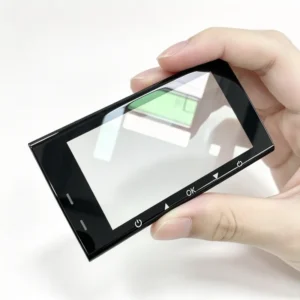
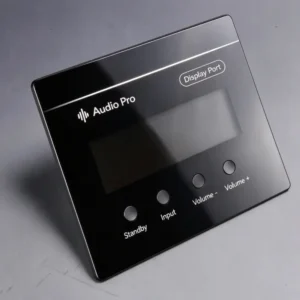
Black printing around the display is commonly used to create a clean transition between the active display and the device housing.
The printed area can also contain logos, icons, indicators or other graphics.
For OEM tablet projects, the artwork should be aligned with the display and mechanical drawing.
This is particularly important when the glass contains camera openings, speaker openings or sensor windows.
Print registration can be checked against the finished dimensions before mass production.
Edge Processing and Fit
The edge of tablet glass is important because it determines how the glass sits inside the device housing.
Depending on the design, the glass may require a specific edge shape, chamfer, radius or polished finish.
CNC processing can be used when the tablet requires non-standard outlines, openings or precise edge geometry.
The final edge specification should match the housing and bonding method.
A glass panel that has the correct overall length and width can still create assembly problems if the corner radius or edge profile does not match the enclosure.
Surface Treatments for Tablet Applications
Different tablet products can require different surface properties.
Available options may include:
- Anti-fingerprint treatment
- Anti-glare treatment
- Anti-reflective treatment
- Scratch-resistant surface options
- Chemical strengthening
- Printed decorative layers
- The best combination depends on the product’s environment.
A tablet designed for outdoor operation may place greater emphasis on reflection control. A shared commercial terminal may prioritize easy cleaning and fingerprint resistance. A consumer device may require a balance between optical performance, touch response and surface feel.
There is no single coating combination suitable for every tablet.
Custom Tablet Glass Thickness
Tablet cover glass can be produced in different thicknesses according to the mechanical design.
Thinner glass may help reduce weight and support a slim device profile.
Thicker glass may be considered where additional rigidity is required.
The final thickness should be determined together with the display structure, touch sensor, bonding process and housing.
For larger tablet screens, the unsupported span of the glass is also important because the panel can experience different mechanical loads compared with a small display.
Tablet Touchscreen Glass for OEM Production
The glass needs to work correctly with the touchscreen assembly.
The dimensions, surface condition and thickness can influence the final touch structure.
For this reason, tablet glass development should involve the glass, touch sensor and display module rather than treating the glass as an independent replacement part.
For OEM projects, drawings and samples can be reviewed before production to confirm:
- Glass dimensions
- Thickness
- Corner radius
- Holes and openings
- Printing
- Surface treatment
- Edge processing
- Strengthening requirements
This approach helps reduce problems during assembly and makes it easier to maintain consistency during mass production.
Tablet Cover Glass for Your Next Project
A tablet front panel can look simple, but the finished glass specification often includes many details that are not visible from the outside.
The correct material, thickness, edge geometry, printing, strengthening and surface treatment all need to match the product design.
For OEM tablet manufacturers, custom tablet cover glass can be developed from drawings, CAD files or samples and supplied as a finished glass component ready for assembly.
Send your tablet glass drawing, dimensions, required thickness and application details for a technical review and quotation.