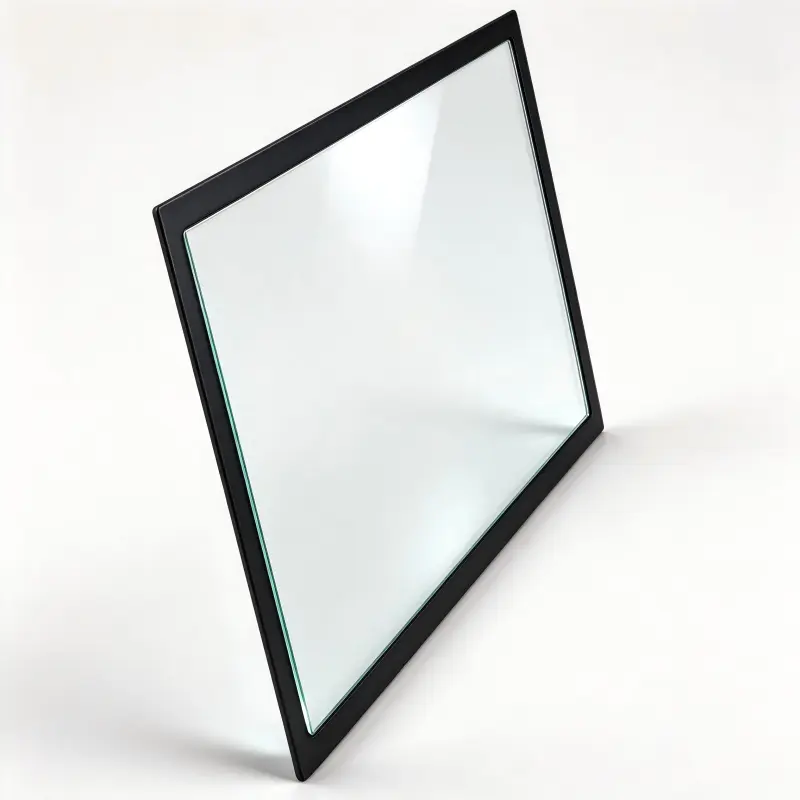



Anti-Reflective Glass for Machine Control Interfaces
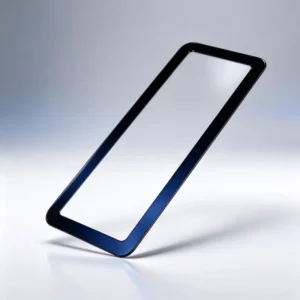
Industrial human-machine interfaces are used on production equipment, automation systems, machine tools and process control units. Unlike a standard glass panel, an HMI cover often needs to fit a defined housing and maintain a clear viewing area around printed graphics, buttons or touch controls.
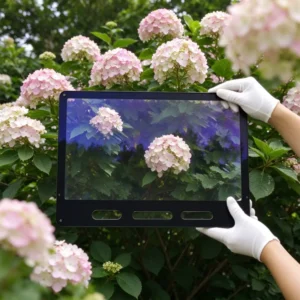
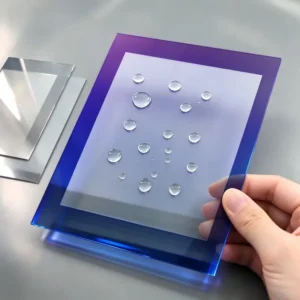
Anti-reflective (AR) coating reduces light reflected from the glass surface. It can help improve display visibility under challenging lighting conditions, although the final result also depends on screen brightness, viewing angle and ambient illumination.
AR coating should not be confused with anti-glare (AG) treatment. AR reduces surface reflection through an optical coating, while AG uses surface texture to diffuse reflected light. Depending on the display and viewing requirements, either treatment or a compatible combination may be considered.
Custom Processing for Industrial HMI Cover Glass
An industrial control panel may require more than a flat glass sheet. Mounting holes, irregular outlines, printed borders and carefully finished edges can all affect assembly.
Zilang can review the following requirements for custom HMI glass projects:
- Glass material and thickness: Selected according to the equipment design, strength requirements and optical specification.
- Custom dimensions: Rectangular or drawing-defined outlines for different display formats.
- CNC machining: Holes, slots, notches and other specified cutouts, subject to drawing review.
- Edge finishing: Ground or polished edges according to assembly and handling requirements.
- AR coating: Single-sided or double-sided configurations, depending on the optical design.
- Optional AG treatment: Considered when diffuse reflection control is needed and the resulting haze and image sharpness are acceptable.
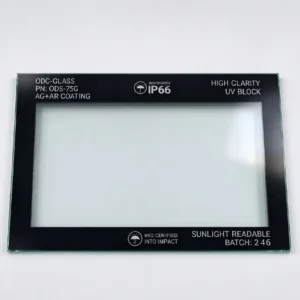
- Silk-screen printing: Black borders, logos, symbols and masked areas around the active display.
- Glass strengthening: Chemical strengthening or thermal tempering where suitable for the selected material and panel design.
The final manufacturing specification should define critical dimensions, hole positions, tolerances, coating surfaces and printing boundaries. These details help reduce fit-up problems when the glass is installed in an existing HMI enclosure.

Where Industrial HMI Glass Is Used
Custom AR glass can be considered for a range of industrial interfaces, including:
- Factory automation control panels
- CNC machine operator interfaces
- PLC and machine-control displays
- Industrial touchscreen terminals
- Process monitoring equipment
- Electrical equipment control interfaces
The correct configuration depends on how the panel will be used. A touchscreen operated throughout a production shift may have different surface requirements from a display used mainly to monitor machine status.
For equipment exposed to dust, oil residue, cleaning agents or repeated contact, specify the actual conditions before selecting the coating. Coating compatibility and durability should be evaluated against the intended cleaning procedure rather than assumed from the AR designation alone.
How to Specify AR Glass for an HMI Project
For an accurate quotation, provide a drawing or sample showing the external dimensions, thickness, corner radii, mounting holes and edge requirements. Indicate which areas must remain optically clear and whether black printing or other graphics are required.
For optical performance, identify whether the main concern is reflected light, image contrast or viewing-angle performance. If your project has a target for visible-light transmittance or surface reflectance, include the numerical target and test method. Also specify whether AR coating is required on one or both sides.
If the glass covers a touchscreen, identify the touch technology and the complete display stack where possible. Coating, surface texture, thickness and any bonding layer should be assessed as part of the finished assembly.
For repeat production, confirm the drawing revision, critical tolerances, inspection requirements, prototype quantity and forecast order volume before approving mass production.
Request a Custom AR HMI Glass Quote
Zilang works with drawing-based OEM requirements for custom glass components. Send your panel drawing, material preference, thickness, coating requirements and estimated quantity for a manufacturing review.
Frequently Asked Questions
What is the difference between AR glass and AG glass for HMI panels?
AR coating reduces surface reflection. AG treatment diffuses reflected light using a textured surface. The appropriate choice depends on lighting, viewing distance, display detail and acceptable haze.
Can AR glass include black silk-screen borders?
Yes, printed borders and other specified graphics can be included in the design review. Provide the artwork, dimensions and required clear viewing area.
Can mounting holes and custom outlines be manufactured?
Custom outlines, holes, slots and notches can be evaluated against the supplied drawing and manufacturing tolerances.
Should I choose single-sided or double-sided AR coating?
The choice depends on the optical requirements, exposed surfaces, durability expectations and budget. Ask for the expected reflectance and transmittance data for the proposed configuration.
What information is needed for an OEM quotation?
Provide a drawing or sample, glass dimensions, thickness, material preference, coating configuration, edge finish, printing details and estimated quantity. Include any optical targets and inspection requirements if available.